Sir Mark Rowley: Policing Faces Failure Without Reform

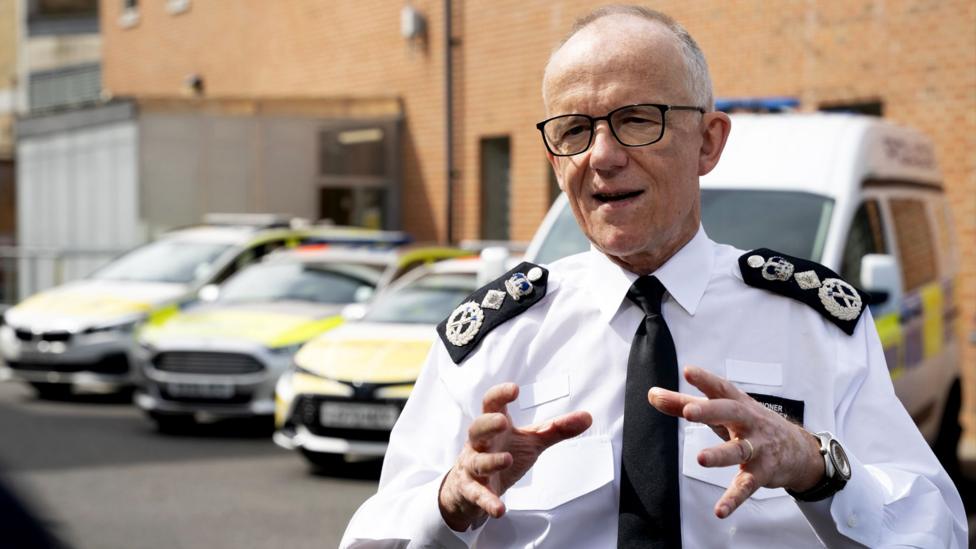
The head of the Metropolitan Police, Sir Mark Rowley, is set to warn that the current structure of policing in England and Wales is on a path toward failure unless urgent reforms are implemented. In an address this Friday, Rowley will argue that the existing model is fundamentally incapable of countering the complexity of contemporary criminal activity. In a speech on Friday, Sir Mark Rowley will call for the system to change, arguing it is unable to cope with the sophistication of modern criminals.
Proposed changes involve a significant overhaul, representing the most extensive reorganization since the 1960s.
Rowley advocates for a three-tiered system: local teams to address neighborhood concerns, regional forces designed to pool specialist expertise, and a new National Police Service dedicated to tackling the most sophisticated criminal threats. Larger forces, this included plans for a National Police Service to tackle the most complex crimes and a possible merger of the 43 forces into fewer.
This framework would effectively replace the current 43-force structure with eight to 10 regional entities supported by hundreds of local commands.
The argument for this transition centers on the evolving nature of crime. Organized networks, cyber-criminals, fraud syndicates, and online child abusers increasingly operate across borders, yet law enforcement remains constrained by localized geographic boundaries. Rowley asserts that the current system is vastly overstretched, stating, “We have 43 overstretched forces trying to do too much, with too little.”
Merging these forces, Rowley suggests, would eliminate operational duplication and allow thousands of personnel to be redeployed to front-line duties. These proposals follow a consultation initiated in January by Home Secretary Shabana Mahmood, which previously explored the creation of a National Police Service and potential force mergers.
Stakeholder Perspectives and Official Stance
- Home Office spokesperson: Stated that the 1960s-era policing model is no longer fit for purpose.
- Association of Police and Crime Commissioners: Acknowledged the need for a National Police Service but expressed skepticism regarding the necessity of reducing forces into nine regional mega-units.
- Rural Police and Crime Commissioners: Categorized the potential mergers as political maneuvering intended to favor larger forces.
- Prime Minister Andy Burnham: Has not yet issued a response regarding the proposals.
Beyond structural issues, Rowley highlighted critical financial pressures. Since 2010, investment in policing has dropped from approximately 0.9% of GDP to 0.7%. He argues that prolonged underfunding has forced agencies to rely on aging infrastructure. Furthermore, officers are increasingly diverted from local policing responsibilities to manage demands related to social care and mental health.
The impact of these systemic challenges is reflected in performance data. Sir Mark noted that national positive outcomes have declined by more than half compared to figures from 12 years ago, while public trust in policing has diminished by 9%. Saying positive outcomes nationally are now less than half the level they were 12 years ago, while public confidence has fallen by 9%, he will also point to falling police performance.