
Rehabilitated fishing cat released into wild with satellite collar

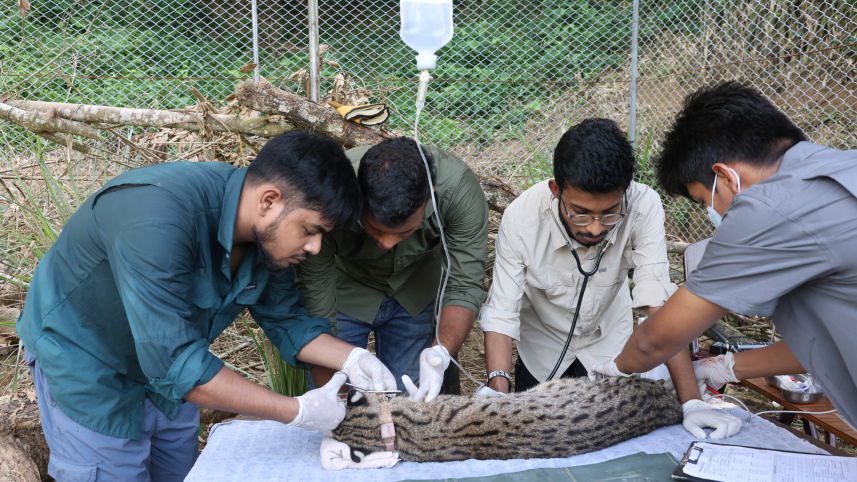
Alfie was rescued by the Bangladesh Forest Department from northern Bangladesh in February this year
A rescued fishing cat that underwent months of treatment and rehabilitation has been released into the wild with a satellite tracking collar in an effort to better understand and conserve the threatened species in Bangladesh.
The male fishing cat, named “Alfie”, was rescued by the Bangladesh Forest Department from northern Bangladesh in February this year and later transferred to the Jankichara Wildlife Rescue and Rehabilitation Centre. At the time of rescue, the animal weighed only 5 kg and was suffering from a severe jaw injury that made it difficult for him to feed properly.
After receiving intensive veterinary care and rehabilitation, Alfie recovered and gained weight to more than 12 kg, according to conservationists involved in the project.
Before being released, the cat was housed for eight weeks in a specially built soft-release enclosure at Ootterbhag and Indanugger Tea Estate. The enclosure was designed to help the animal familiarise itself with the surrounding habitat before returning to the wild.
Researchers later fitted Alfie with a 200g satellite collar, weighing less than two percent of its body weight, and released it within the tea estate, which is surrounded by wetlands considered suitable habitat for fishing cats.
Conservationists said the satellite collar will allow researchers to monitor the cat’s movements and study how rehabilitated fishing cats adapt to human-modified landscapes after release.
They noted that rescued wildlife is often released without rehabilitation or post-release monitoring, meaning little is known about survival and adaptation after release.
The initiative was implemented jointly by the Bangladesh Forest Department, Ootterbhag and Indanugger Tea Estate, Ritsumeikan University, SCOPE Foundation’s Project Fishing Cat, and the Fishing Cat Conservation Alliance.