Millennial Newcomer Could Decide New Zealand’s Tight General Election

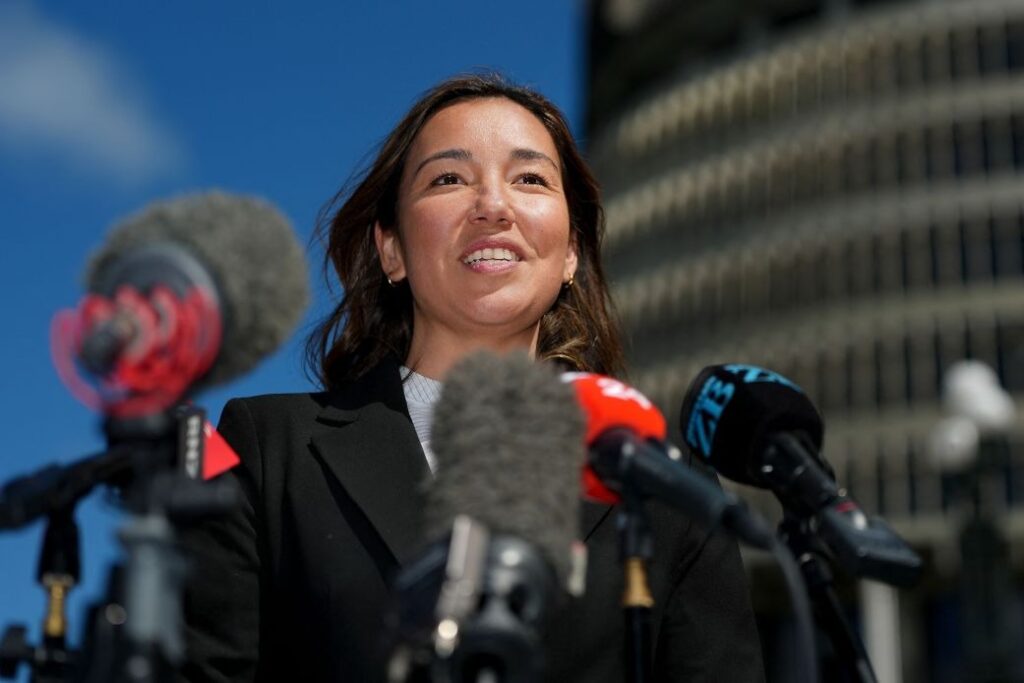
New Zealand is heading toward one of its most unpredictable elections in years. With the incumbent conservative coalition facing a precarious path to victory, polls indicate a millennial-led newcomer could emerge as the decisive kingmaker in the country’s shifting political landscape.
For nearly a century, the political arena has been defined by the center-right National Party and the center-left Labour Party. However, public support for both institutions has dipped below 30% each. Disillusioned by stagnant economic growth, high unemployment, and rising living costs, voters are increasingly looking toward alternative options on the political fringes.
The Opportunity Party is currently poised to cross the 5% parliamentary threshold. This milestone would mark the first time in 30 years that a total outsider party, void of established political figures, has secured seats in the legislature. Lara Greaves, a politics associate professor at Victoria University of Wellington, described the rise of the party as a “super significant” development. “There’s not been really anything like it, and we’ve seen a number of well-funded attempts,” Greaves noted, adding that the movement is resonating with citizens frustrated by the current status quo. You have to stop treating us like children.’”.
The party’s platform, which promotes a business-friendly and climate-conscious agenda, includes a proposed land tax and a universal basic income designed to replace existing welfare payments. If the Saturday election results reflect current polling, the party would hold the balance of power, forcing both major coalitions to negotiate for its support to build a majority government. While the Opportunity Party has expressed a willingness to collaborate with either side, Prime Minister Christopher Luxon has formally ruled out any post-election agreement with them. Effectively, that means Wong could have her choice of government, and her party is happy to work with either side. He may yet face the stark choice of walking that back or losing power.
Luxon’s leadership, alongside that of opposition Labour leader Chris Hipkins, has struggled to capture the public’s imagination in the same way as predecessors like Jacinda Ardern or John Key. This lack of traditional rapport has elevated the influence of smaller parties, shifting them from auxiliary supporters into essential negotiators. Greaves highlights this as “unprecedented territory,” noting that smaller parties are demanding a larger stake in policy development rather than settling for minor cabinet concessions. Who faced down two caucus confidence votes on his leadership this year, nor his key opponent Labour’s Chris Hipkins (a former prime minister himself) have been able to endear themselves to the public like, neither Luxon. But the minor parties have traditionally been supporting players, granted a tiny proportion of cabinet posts and limited policy concessions, coalitions are a near constant under the South Pacific nation’s mixed-member proportional (MMP) voting system.
The potential for fringe policy influence presents a complex challenge for voters. Many policies that receive little attention during the campaign trail could ultimately dictate the direction of the next government. The incumbent National-led coalition is already viewed as the most right-wing government in a generation, and there are concerns that emboldened partners—such as the right-wing-libertarian ACT party and the nationalist New Zealand First party—could pull the administration further right. These partners have campaigned on controversial proposals, including ending affirmative action in medical schools, reviewing the ban on gay conversion therapy, and implementing sweeping immigration restrictions. Giving the minor party contenders more attention and putting them in a position to have significant influence over the direction of the next government, their relative unpopularity has shattered a decades-long trend of battle royale-style campaigns between the major party leaders. According to “With the 2023 government, a lot of people argue that that was already a huge lurch to the right, especially in terms of (indigenous) Māori rights … So that’s potentially concerning for more moderate voters,”, Greave.
On the other side of the spectrum, concerns remain regarding how a leftist coalition would fund its agenda. Labour has signaled potential capital gains taxes, while the Greens have proposed levies targeting big tech companies and the ultra-wealthy. Greaves warns that the math behind these fiscal plans remains a point of significant uncertainty for voters. Should the incumbent coalition be defeated on Saturday, it would mark the first time in over 50 years that a New Zealand government has failed to win a second term. According to “If the left bloc were to win, they would have this real concern about exactly how they get the money to do what they want to do,”, Greaves. In recent decades, New Zealand elections have typically been easy to predict, but even the experts are struggling to foresee what voters will deliver on Saturday.