UK Prisons Begin Second Wave of Early Releases

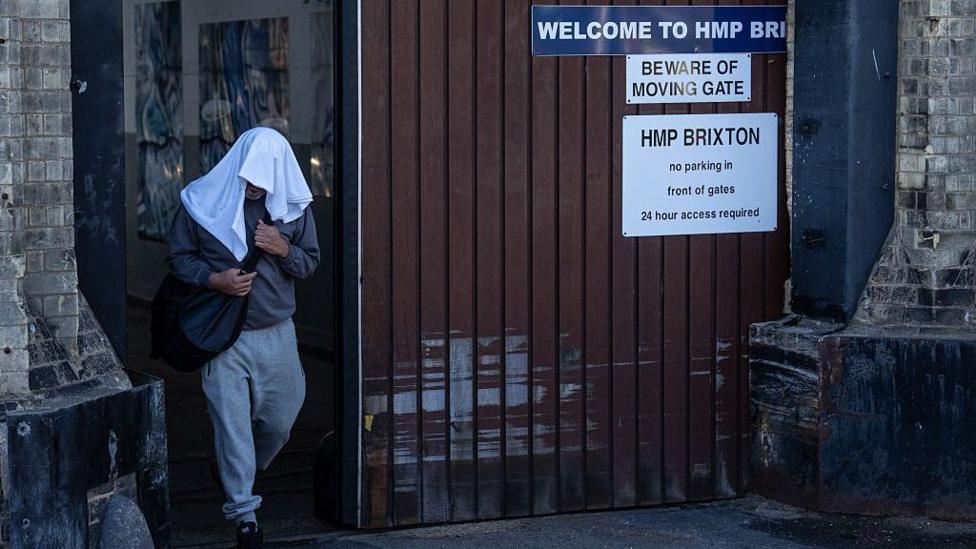
A second phase of the government’s early release program began Tuesday, with about 650 additional offenders set to leave prisons across England and Wales. This measure is part of a broader strategy aimed at addressing the ongoing prison population crisis. Under the updated regulations, these inmates are eligible for release after serving one-third of their sentences, a reduction from the previous half-term requirement. In the first wave of the government’s early release scheme, an inmate walks free from HMP Brixton earlier this month.
This latest group includes individuals serving sentences of up to two and a half years. The process marks the beginning of a phased release schedule that will eventually include prisoners serving increasingly lengthy terms, with the program concluding next June for those currently sentenced to more than 12 years. This follows an initial round of releases on October 1, which involved approximately 700 offenders who were serving terms shorter than 19 months.
As these releases proceed, the Ministry of Justice is navigating labor tensions. Probation officers, responsible for monitoring released individuals, are currently balloting for potential strike action over concerns regarding pay and workload. Napo, the probation union, has stated that the mass releases have placed significant pressure on its staff. Probation members are meeting Tuesday to discuss an upcoming vote, which could lead to industrial action. While the Ministry of Justice has offered a 5% pay increase—which two other unions have accepted—Napo members have been seeking a 12% raise to compensate for earnings lost since 2010.
The government maintains its offer is reasonable and notes it is accompanied by a £700 million investment in the probation service. This funding is intended to recruit an additional 1,300 officers and implement artificial intelligence tools designed to assist in the monitoring of offenders. Those being released are generally expected to be fitted with electronic tags and subjected to other monitoring conditions for the remainder of the middle third of their prison terms.
Parallel to the prison releases, the government is returning its criminal court reform agenda to Parliament. Officials recently abandoned the most controversial proposal, which would have established a new category of Crown Court trials featuring a judge sitting without a jury for defendants facing up to three years in custody. However, the revised plan still intends to remove the right to a jury trial for complex, long-running fraud cases and will keep approximately 5,500 other trials within the magistrates’ court system by ending the defendant’s option to request a jury.
To combat court backlogs, the government plans to expand the use of “blitz” or “short trial” courts. Pilot programs have demonstrated that grouping similar cases can expedite proceedings; for example, a pilot at the Old Bailey successfully halved the London backlog of 500 assault cases involving emergency workers over the summer.
Furthermore, the government has accepted over 150 of 180 recommendations intended to modernize criminal courts. A key change involves expanding the sentencing powers of volunteer magistrates. While the government rejected advice to keep the limit at 12 months, magistrates will now gain the authority to impose sentences of up to two years, a shift designed to divert more cases from the Crown Court and further alleviate delays in the legal system. It has rejected his advice to retain a restriction on volunteer magistrates that means they can only jail an offender for 12 months.