Sheikh Mansoor Reviews Dubai’s Initiatives for People of Determination

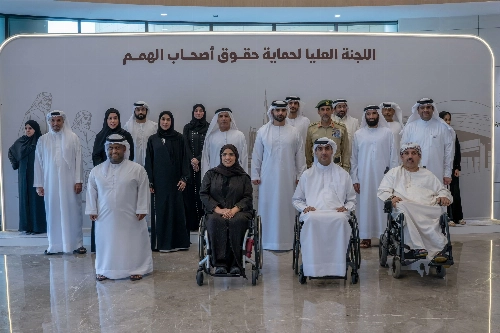
Sheikh Mansoor Bin Mohammed Bin Rashid Al Maktoum, Chairman of the Higher Committee for the Protection of the Rights of People of Determination, recently convened in Dubai to assess the progress of the committee’s 2026 action plan. The meeting focused on reviewing government initiatives aimed at fostering independence, improving quality of life, and broadening societal participation for People of Determination.
Addressing the assembly at the Roads and Transport Authority (RTA), Sheikh Mansoor emphasized the government’s dedication to translating policies into tangible results. He highlighted that coordinated cross-government efforts and the implementation of inclusive services are essential to ensuring that People of Determination can engage with the community confidently and independently. These efforts are aligned with the broader goals of the Dubai Social Agenda 33, focusing on priority sectors such as social services, inclusive transit, and advanced technological accessibility. Ensuring easy access to facilities and services, and enabling them to participate in society with confidence and independence, this is achieved by developing inclusive services that respond to their needs. Alongside measuring the impact of initiatives, remain fundamental to achieving sustainable outcomes that reinforce Dubai’s position as a city for all.”, coordinated efforts across government entities.
The RTA’s contribution to these goals includes maintaining a fleet of over 1,290 accessible buses and more than 14,000 taxis, 27 of which are specifically outfitted for wheelchair users. Furthermore, the city has established 2,782 dedicated parking spots. Buildings under RTA management now fully adhere to the Dubai Universal Design Code, incorporating features like electric ramps, automated systems, audio-visual announcements, and over 5,000 linear metres of tactile paving for visually impaired individuals. Other inclusive facilities include more than 5,000 linear metres of tactile ground surface indicators for people with visual impairments, electric and automatic ramps, audio-visual announcement systems, and assistance request buttons.
Financial concessions remain a cornerstone of the support system. Mattar Al Tayer, Director-General of the RTA, briefed the committee on current benefits, including full exemptions from public transport fares, vehicle registration fees, and Salik tag issuance costs. Additionally, individuals qualify for a 50% discount on driver’s license fees and specialized taxi fares. To improve convenience, the ‘Aber’ mobile vehicle inspection service, which allows for home-based checks, currently uses 14 units with plans to expand the fleet to 30 by the end of 2026.
Transport inclusivity also extends to sensory-friendly infrastructure. Sensory rooms established at the Al Satwa and Oud Metha Bus Stations have secured certification from the Dubai Autism Centre. These facilities have been well-received, with customer satisfaction ratings reaching 91% at Al Satwa and 86% at Oud Metha throughout 2025 and 2026.
The Community Development Authority (CDA) also reported on its financial aid programs, which have supported over 3,500 beneficiaries. These funds assist with essential services including rehabilitation, education, shadow teachers, and the procurement of assistive technology. Hessa Bint Essa Buhumaid, Director General of the CDA, stated that the agency is prioritizing a flexible, integrated system that addresses the specific needs of families to ensure greater personal independence for every beneficiary.