Iran Issues New Warnings as Military Prepares for Conflict

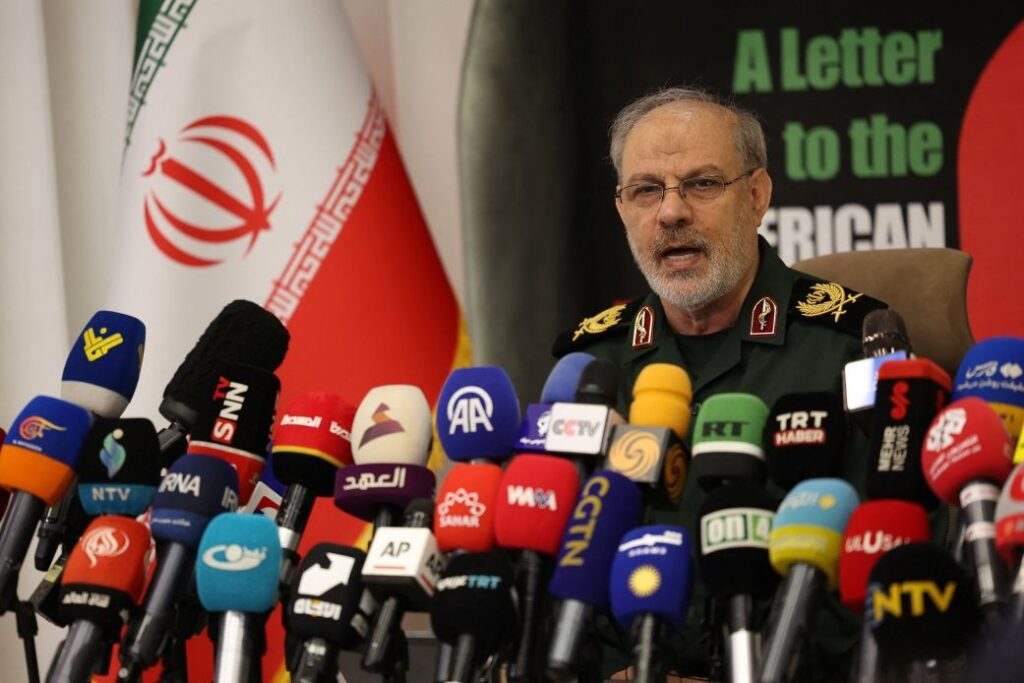
Iranian military commanders have spent the last month issuing a series of public warnings, claiming the nation has stockpiled new weaponry and is prepared to strike targets beyond the immediate region should the United States resume hostilities that first erupted in February. Revolutionary Guards spokesperson Hossein Mohebbi stated late last month that the world would be amazed by these new capabilities, declaring that the Islamic Revolutionary Guard Corps is ready for a long-term conflict. Past streets where Revolutionary Guards are visible, and military bases remain active, a mother of two described to the fear she lives with as she sends her children to school each morning.
Tehran has indicated it may broaden its military scope if fighting restarts, with officials identifying potential targets that include undersea internet cables, regional oil and gas facilities, and artificial intelligence data centers. Nearly nine months into the stalemate between the two nations, both sides maintain they have achieved victory—Tehran cites its resilience, while Washington points to the damage inflicted on the regime. Despite the impasse, the Trump administration continues to experiment with various military and economic measures intended to force a change in Iran’s position. The conflict has stagnated into a stalemate that has left everyone uncertain about Trump’s endgame and the world grappling with economic unrest, nearly nine months after the US and Israel launched their war on Iran. So, what’s the point of starting another war?”. Which it accuses of colluding with Washington, iran’s retaliation focused mostly on its Arab neighbors. Dubai, a major tourist destination, was targeted, water plants in Kuwait were hit, and attacks on data centers disrupted banking services in several countries across the region.
Inside Iran, the civilian population is bracing for potential violence. A 70-year-old Tehran resident shared that they have prepared emergency supplies and power banks, fearing that renewed bombing could commence at any moment. Others expressed deep fatigue, noting that the constant uncertainty regarding the conflict’s next phase makes it difficult to feel at ease, with many residents feeling that a resumption of war is increasingly likely. Ordinary Iranians, long burdened by conflict and economic uncertainty, are once again bracing for the on the ground realities of war, while Iran’s commanders signal strength and readiness. According to “Every single day and every night, we’re waiting for the bombing to start again,” a 70-year-old Tehran resident, Last week. “I’ve charged all my power banks, stocked up on water, and got everything ready, because the attacks could start again at any moment, any day.”. “It’s all anyone can talk about…you just have it in the back of your head, is tonight the night. The Iranians spoke to on the condition of anonymity in order to speak freely about their fears of further war. According to figures by the UAE’s defense ministry, abu Dhabi intercepted nearly all of the projectiles.
While the White House has publicly indicated it would avoid new actions before the midterm elections, U.S. officials have acknowledged that internal discussions continue regarding potential military options. Reports suggest the U.S. military has developed contingency plans that could involve the GBU-43/B Massive Ordnance Air Blast Bomb, the largest non-nuclear weapon in the American arsenal, if a decision is made to strike Iranian nuclear or energy sites. Iranian army commander Alireza Sheikh dismissed these suggestions as propaganda, stating that such threats are designed only to intimidate the population. Over the last few weeks, White House advisers have held meetings to discuss various options for Iran. According to while Trump announced publicly that he would not take new actions before the midterm elections, several advisers, Privately they didn’t know whether that statement was definitive or could change before election day on November 3.
Tehran’s military strategy has shifted toward a more offensive posture.
Recent social media reports from the Revolutionary Guards noted successful military exercises featuring the launch of 30 ballistic missiles. Analyst Farzin Nadimi of The Washington Institute suggested that an emboldened Iran could attempt to utilize long-range missiles against U.S. interests in Europe, such as logistics hubs in Germany or airbases in England, though he noted such actions would likely be reserved for extreme escalation. Recently, the U.S. relocated long-range bombers from the United Kingdom following an unspecified threat and the arrest of individuals connected to an alleged plot against a U.S. airbase. According to last week, Revolutionary Guards social media accounts, Iran conducted military exercises across the country, including launching 30 ballistic missiles in one go. “However, Iran would likely reserve that possibility to a very top level of escalation,” Nadimi said. The British government arrested a number of individuals in connection with an alleged Iranian plot to target the UK airbase where the US bombers had been stationed, days before the move. Iran fired more than 2,500 missiles and drones on the United Arab Emirates alone, more than any other country, including Israel. The only maritime waterway used by neighboring nations to export oil, before striking civilian infrastructure across Arab cities, iran effectively blocked the Strait of Hormuz.
To overcome air defenses, experts suggest Iran might employ swarms of AI-enabled drones capable of real-time communication and flight-path adjustments to evade detection. There is also evidence that Tehran is seeking to advance cruise missile technology to include supersonic propulsion. Ali Vaez, an analyst with the International Crisis Group, noted that Iranian commanders are preparing for what they see as inevitable renewed hostilities, hoping that highlighting the potential costs of such an attack will serve as a final deterrent against Washington. “I would like to know exactly what else the US is planning to bomb?” she said. “They couldn’t even take (the Iranian leadership) out. “Tehran wants to make clear that the next round will be fought on a much wider battlefield, with fewer restraints and potentially more lethal consequences,” Vaez said. “But the danger is that what Iran intends as deterre.