Canadians Avoiding Social Media Posts During US Trips

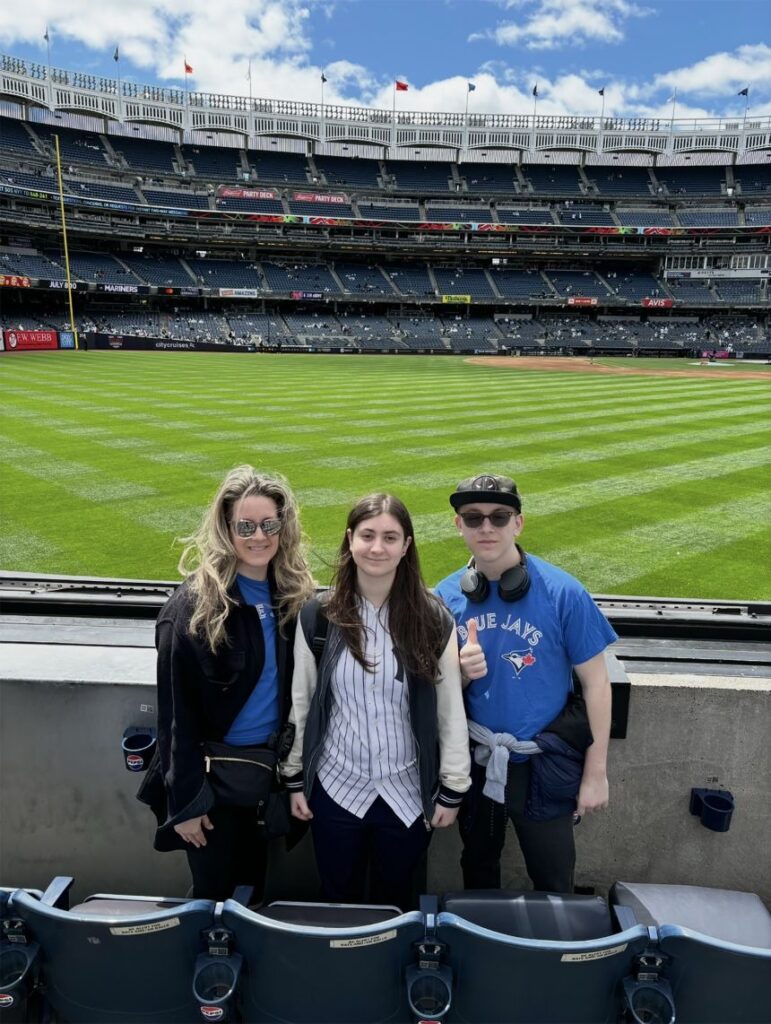
Travel patterns between Canada and the United States have shifted significantly since early 2025. Following the introduction of tariffs by U.S. President Donald Trump in March 2025, which sparked a persistent “buy-Canadian” movement, cross-border travel numbers saw a sharp decline. After reaching 39 million return trips in 2024, the volume of travelers contracted for 15 consecutive months, a trend that only broke in April 2026. Data from the 2026 Canadian Travel and Tourism Outlook study by Environics Research indicates that 46% of Canadians are actively avoiding the U.S., while another 15% feel deeply conflicted about visiting. They travel to the city to watch a Yankees game at Yankee Stadium, to celebrate her daughter’s birthday each April. Then the tariffs and 51st state mentions began and that number contracted — sharply. The 2026 Canadian Travel and Tourism Outlook study from Environics Research shows that six in 10 Canadians are either actively avoiding travel to the US (46%) or would travel to the US, but feel conflicted (15%). Saying, ‘You could just watch the Yankees play here in Toronto,’” she says. But they wondered, “Is the border going to be stricter now?”, the plan was to drive across with a friend. In the end, she and a friend drove to the show.
Even as Statistics Canada recorded a slow increase in border crossings this past summer—though volumes remain 25.6% below 2024 levels—many travelers are choosing to keep their journeys discreet.
Stefanie Ricchio, a Toronto-based accountant, continues her tradition of taking her children to New York City for birthdays, yet she admits to withholding photos and updates from social media.
She describes a personal conflict between wanting to maintain family memories and feeling that she should not be spending her money in the U.S. during such a turbulent period. “It’s a special place for us and a tradition for my daughter,” she said, noting that she fears judgment from others who might ask why she did not choose to support local events in Toronto instead. “I felt like this is not really something that I want to broadcast because I feel like I shouldn’t be spending my money there,” she says. “There’s that conflict of (being a) super-proud Canadian, but also these are our traditions and memories that mean something to my daughter that I didn’t want to give up.”. “If I did have to tell somebody that I was going, I felt a little bit of angst. If there was like a Disney World in Vaughan,” he says, referring to a suburb of Toronto, “of course I wouldn’t go to Orlando. To be honest.”, i found that to be a bit shocking. “All of the Lake Ontario rhetoric was a week or so before the concert, and then more tariffs were put into place, so there was a heightened sense of everything going on,” she says. The other reason was concern over having her phone searched at the border, part of it was not wanting people who follow her to know she had gone.
Professional perspectives confirm this trend of cautious travel. Kemi Wells-Conrad, who leads Vancouver-based Wells Luxury Travel, observes that her clients are split. Some have removed all U.S. destinations from their plans, even bypassing American airports for layovers. Others still travel for family reasons, particularly to locales like Hawaii, which many Canadians view as culturally distinct from the mainland. Wells-Conrad notes that even those traveling to established family properties or resorts often go to great lengths to hide their whereabouts from their social circles. Like Ricchio, they are traveling to sports games, concerts and theme parks. “Because Hawaii, for example, is so good with family resorts and it might be their annual tradition, or some of them have a home in Arizona or one of the Hawaiian islands.
Barry Choi, a personal finance expert in Toronto with over 12,000 Instagram followers, has taken a different approach. While he initially stayed quiet, he now documents his work and leisure trips to the U.S. publicly. Though he has faced online backlash, he argues that he travels for personal and professional connections rather than political reasons. He reports that his interactions with Americans, such as those in the Palm Beaches, often involve locals apologizing for the U.S. administration. “I do feel like the people there are feeling the same struggles as us,” Choi noted, emphasizing that he believes both sides of the border are dealing with similar economic and social tensions.
For others, the decision to keep trips private is tied to personal anxiety and fears of scrutiny. A marketing executive named Caleigh, who traveled to upstate New York for a concert, chose not to post about her experience on social media. Her primary concerns included potential judgment from friends and family, as well as apprehension regarding border security. She noted that her car was subjected to flashlight searches during the crossing, an experience she described as significantly more intense than previous years. “The vibe has completely shifted,” she said, adding that she does not intend to return to the U.S. anytime soon, regardless of whether she could keep the trip private.