Nandy Denies Politicizing Remembrance Sunday After Erasmus Row

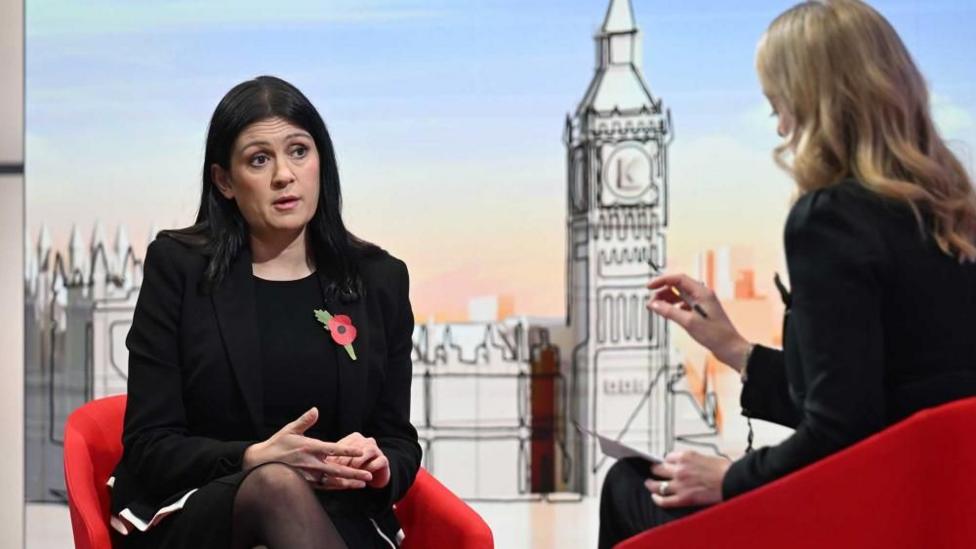
Culture Secretary Lisa Nandy has firmly rejected accusations that she politicized Remembrance Sunday, following backlash over her decision to connect the day of commemoration to the UK’s return to the EU’s Erasmus+ exchange program. Applications will open for Erasmus+ later this month.
The controversy began on Saturday night when the Department for Culture, Media and Sport issued a statement regarding the scheme, which is set to return in January after a six-year absence.
The department remarked that as the nation observes Remembrance Sunday, the program would offer a new generation opportunities to foster connections across Europe. Nandy elaborated on this sentiment, stating that the move honors the sacrifice of those who served by building collaboration with allies. According to referring to the scheme, Nandy, In her department’s press release: “As we remember the immense courage of those who served our country, we honour them by building the best opportunities for the next generation through closeness and collaboration with our allies. Chief executive of the Veterans Institute, told the Telegraph that people should “just honour the fallen” on Remembrance Sunday rather than discussing “party political matters”, peter Sharples.
The Conservative Party responded with significant criticism. Chairman Kevin Hollinrake labeled Nandy’s comments as tone-deaf and shameful, insisting that veterans fought for causes far deeper than a student exchange initiative. He urged the minister to apologize, arguing that the solemnity of the day should not be used as a platform for promoting EU integration. It is not a day for a Labour minister to try to make an EU membership pitch,” he added.
Reform leader Nigel Farage also weighed in, describing the timing of the announcement as being in very poor taste. He further criticized the financial implications of the move, labeling Erasmus an expensive, inferior alternative to the Turing Scheme, which was established in 2021 as a post-Brexit replacement.
During an appearance on Sunday with Laura Kuenssberg, Nandy defended her stance, invoking the post-war legacy of Winston Churchill. She argued that Churchill himself advocated for extending a hand of friendship across Europe to honor the sacrifices of his generation. Nandy stated that Brexit had inadvertently closed off vital opportunities for young British people to understand the broader impact of their forebears’ fight for European freedom. According to nandy, She was “horrified” by the Tory response and insisted that the expanded EU scheme for study and work would help young Britons recognise wartime sacrifice.
When pressed on whether she intentionally timed the announcement to promote the government’s new deal with the EU, Nandy maintained she was not specifically choosing the date for political gain. She asserted that in a different political climate, the connection between international collaboration and honoring the past would be viewed as common sense. Pressed about linking the day to what the government believes are the cultural benefits of the scheme, Nandy said: “There was a time where that wouldn’t have even raised an eyebrow as somehow political, it was just common sense – and it is common sense. He also criticised ongoing negotiations between the UK and the EU for a new youth mobility scheme ahead of a major summit on 20 November.
The government is investing £570 million to join the expanded Erasmus+ program, a figure it describes as a 30% discount compared to previous terms. The scheme will facilitate year-abroad placements for university students and introduce cultural exchanges. Additionally, 18-year-olds will receive free train passes for European travel, with specific outreach efforts aimed at increasing participation in regions like the Midlands and northern England. According to the government, Free train passes would be available for 18-year-olds to visit EU countries by themselves or with up to five friends. With a focus on areas of the country less engaged by Erasmus previously such as the north of England and Midlands, the government said, youth groups will also get to do short exchanges in other countries.
Amidst these developments, discussions continue regarding the UK’s broader relationship with the EU. Prime Minister Andy Burnham has called for an honest dialogue about potential future ties, including a prospective youth mobility scheme. Nandy acknowledged on Sunday that many of the original promises of the 2016 Brexit vote remain unfulfilled, noting that the government faces complex trade-offs as it seeks to define the nation’s future path.