Huawei, Xiaomi fandoms battle tech supremacy

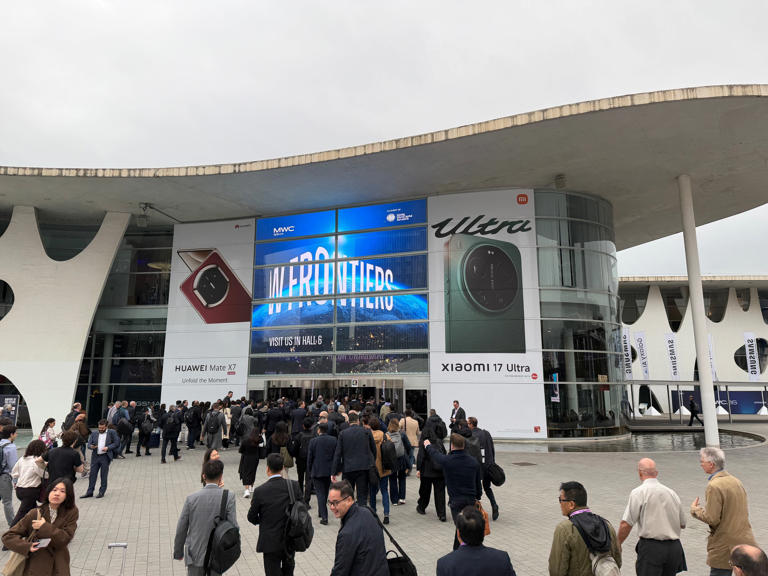
“Mutual attacks between Huawei and Xiaomi’s extreme fans are one of the ugliest phenomena on Chinese internet.”
Ming Jinwei, who runs the Chinese current affairs commentary account ‘Ming Shuizhatan,’ wrote this on the 7th. Recently, Xiaomi fans jumped into a controversy mocking Huawei over a ‘zhuzhiliao’ (a traditional bamboo toy that makes noise when spun), reigniting the long-standing fan war between the two companies. Both sides attack each other, calling Huawei fans ‘Haigou’ (a derogatory term likening them to seals) and Xiaomi fans ‘Mihou’ (a derogatory term likening them to monkeys).
From the outside, Chinese tech companies appear to be a ‘single team’ moving under government support, but internally, they engage in a life-or-death competition for technological leadership. The clash between Huawei and Xiaomi’s fandoms is evidence of how fierce this competition has become, even spilling over into ‘fankuan’ (fan culture akin to idol fandoms).
◇Bamboo toy ignites fandom battle
This incident began at the end of last month with the bamboo toy zhuzhiliao. A parody video spread on Douyin (China’s TikTok) comparing the ‘wawa’ sound made when spinning the toy to the gasps from the audience during a 2023 Huawei presentation by Wu Chengdong, CEO of Huawei’s Consumer Business Group. Huawei urgently removed the mocking videos on the 3rd, which drew criticism in China for ‘excessive public opinion control.’
The controversy escalated into a fan war between Huawei and Xiaomi at this point. With Huawei fans already irritated, a past derogatory remark by a senior Xiaomi executive resurfaced. It was revealed that Xu Jieyin, Special Advisor to Xiaomi Group Chairman and Chief of Public Relations, had written to a car blogger in June, “How is ‘Haigo’ doing these days?” ‘Haigo’ is a derogatory term derived from ‘Haijun’ (a term mocking Huawei’s comment manipulation teams) and sounds similar to ‘Haigou.’ As Xu’s remark came under fire, Huawei fans attacked Xiaomi fans as ‘Mihou’ (Xiaomi’s monkeys), sparking a verbal battle between the two fandoms.
◇From allies to rivals… Huawei and Xiaomi’s decade-long war
Huawei’s ‘Flower Shop Fans’ (Huafen) and Xiaomi’s ‘Rice Shop Fans’ (Mifen) were not always hostile. In 2012, Wu Chengdong said, “We should learn internet marketing from Lei Jun,” and Lei Jun, Xiaomi’s founder, said, “Huawei is a model Xiaomi should learn from.”
The dynamic changed in 2013 when Xiaomi caused a storm in China with its low-cost smartphone ‘Hongmi’ (Redmi). Huawei responded the same year by launching ‘Rongyao’ (Honor), a mid-to-low-priced smartphone brand. In 2018, Lei Jun declared at a product launch, “We will defeat Huawei,” and the emotional conflict between the two fandoms became overt.
Recently, the competition has intensified as the battleground expanded from smartphones to electric vehicles, artificial intelligence (AI), and operating systems (OS). Huawei fans deride Xiaomi as a company relying on design imitation and loud marketing, while Xiaomi fans criticize Huawei for exploiting patriotism amid U.S.-China competition to justify high prices. Wu Chengdong’s favorite phrase, “Yaoyaolingxian” (far ahead), is even used by Xiaomi fans as a meme to mock Huawei’s arrogance.
◇‘Fated rivals’ shaping China’s tech ecosystem
In China, it is not uncommon for customers of high-tech companies to form fandoms and attack competitors. Especially in fast-changing markets like smartphones and electric vehicles, technical route debates and product performance battles between leading companies are frequent, with millions of fans and influencers joining real-time broadcasts.
In autonomous driving, there was a prolonged rivalry between Huawei, a traditional powerhouse, and Xpeng Motors, aiming to be China’s Tesla. In 2023, when He Xiaopeng, Xpeng’s chairman, criticized a competitor’s AEB (Automatic Emergency Braking) technology as exaggerated, Wu Chengdong immediately retorted, “There is a CEO of a car company who doesn’t even know what AEB is.” The executives’ feud spilled over into a fan war, making the technical term AEB an instant trending topic on Chinese social media.
In the premium electric vehicle market, fans of AITO (Huawei’s subsidiary brand) and Li Auto clash. AITO M7/M8/M9 and Li L7/L8/L9 are rivals in the family midsize-to-large SUV market, and since cars are a means of displaying wealth, social media mudslinging between ‘AITO owners’ and ‘Li Auto owners’ is common.
In the battery sector, CATL, the strongest player, and BYD, its close follower, engage in disputes. When BYD unveiled its ‘Blade Battery’ in 2020 and used a ‘nail penetration test’ as proof of safety, CATL countered that safety couldn’t be judged by such tests alone. At the time, a car blogger, pressured by BYD fans, raised over 3,000 Chinese yuan (approximately 600,000 Korean won) to purchase CATL batteries and conduct a nail penetration test.
◇‘National champions’ competition fuels tech fandoms
The strong tech fandom culture in China is tied to how companies grow. By releasing products first and rapidly improving them based on user feedback, passionate users become more than consumers—they are key elements in product development. These fans are the first to buy new products, find issues, and voluntarily promote them online. Companies have strong incentives to actively manage fandoms, which serve as research partners, funding sources, and PR agencies.
Analysis also suggests that national pride driven by ‘tech nationalism’ fuels fandom fervor. The competition to determine which company has superior technology is perceived as a ‘final match’ to decide who represents China in the U.S.-China tech rivalry.
It’s also notable that fandom wars accelerate the spread of new technologies to the public. In debates like Huawei and Xpeng’s AEB dispute or BYD and CATL’s battery safety clash, consumers naturally encounter unfamiliar technologies and terms. For companies, fandom wars themselves become free advertising.