Trump Signals Diplomacy Could Avert Further Iran Conflict

President Donald Trump has suggested that intensified diplomatic efforts could prevent a major escalation in hostilities with Iran, marking a shift in tone following his party’s recent midterm election setbacks. Speaking to media on Sunday, the president characterized renewed US military strikes against Tehran as “highly unlikely,” provided the Iranian government makes tangible progress toward an agreement concerning its nuclear program and the reopening of the vital Strait of Hormuz. In a separate appearance on CBS’ “60 Minutes,” the president stated clearly that he was “not looking to” expand the ongoing war. The Houthis have since ramped up attacks on Saudi Arabia in response to Riyadh giving the Yemeni government military support. Which is mediating, have revealed little about the discussions even as diplomatic activity has accelerated since Tuesday’s midterms, both sides and Qatar. Over the past weeks, Iranian military commanders have stepped up their warnings claiming Iran possesses weaponry capable of striking more targets and inflicting even greater damage than before. It is unclear how far the two sides have progressed on that point. So far neither side has been willing to budge on its demands. Iran’s Arab neighbors are divided over any agreement that would hand Tehran too much power and cement its desired hegemony.
While public messaging from both Washington and Tehran points toward a potential path for negotiations, concrete progress remains elusive. Secretary of State Marco Rubio, speaking ahead of his departure for a Group of Seven foreign ministers’ meeting in Paris, expressed skepticism regarding an imminent deal. Rubio described recent Iranian demands as unrealistic, stating that the discussions have not yet been productive. Despite the president’s optimistic outlook on diplomacy, the administration maintains that a military option remains firmly on the table. With Secretary of State Marco Rubio saying Sunday that he “wouldn’t say we’re on the verge of a breakthrough, but hopes of a deal are being tempered by Washington. “Right now, it hasn’t been very productive because the Iranian demands are simply not just unacceptable, but in some cases outrageous and ridiculous and really not realistic.”. After successive rounds of open conflict, Tehran’s trust in Washington has almost vanished.
The political landscape within the United States has shifted following the midterm elections. Vice President JD Vance suggested that the war played a role in recent Republican electoral losses, an assessment the president acknowledged by noting that voters “didn’t like the war.” Nevertheless, the president defended his administration’s military strategy, asserting that he would make the same decision to attack Iran again if faced with the same circumstances.
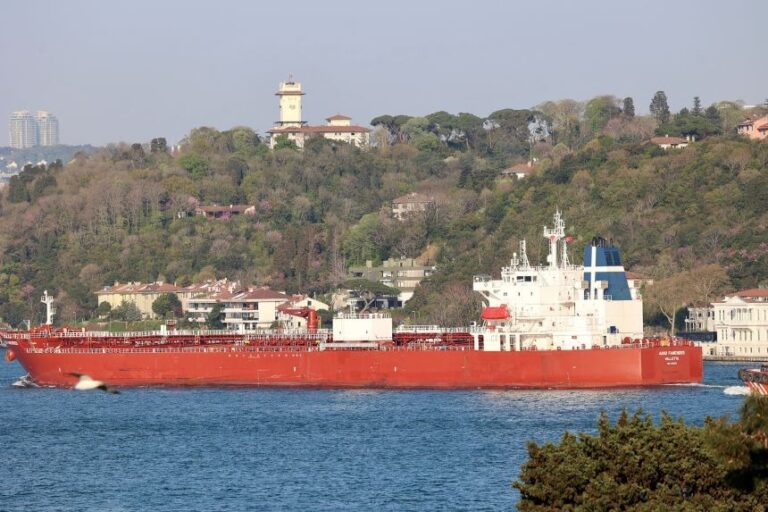
Tehran is leveraging the US election results to influence the current discourse. Foreign Minister Abbas Araghchi remarked on Sunday that American voters had made their choice, adding that it was now time for the White House to act accordingly. Publicly, Iran continues to maintain a rigid stance, insisting that any negotiations over its nuclear program or the Strait of Hormuz are contingent upon seven preconditions, including the lifting of maritime blockades and the cessation of conflict on all fronts. Control of the waterway would give Tehran decisive influence over what enters and leaves the region.
A primary point of contention remains Iran’s nuclear capabilities. Washington is reportedly seeking the dilution or international transfer of a significant stockpile of enriched uranium, which remains hidden within Iranian territory. Tehran maintains that its nuclear activities are restricted to energy production. Beyond the nuclear file, Iran is seeking the release of billions of dollars in frozen assets and relief from stringent economic sanctions that have complicated its crude oil exports. Additionally, Iran has requested compensation for the deaths of Supreme Leader Ali Khamenei and his top military command, who were killed in joint US and Israel strikes earlier this year. Hundreds of kilograms of enriched uranium – the material needed to produce a nuclear weapon – remain hidden somewhere in Iran. Reports indicate Washington wants the uranium diluted or transferred to another country for safekeeping. As one of the world’s largest oil producers, Iran has found it increasingly difficult to sell crude on global markets under US sanctions. A move that could help Tehran ease the severe economic strain on its population amid record inflation, washington appears to be weighing relief on these restrictions.
Mediated by Qatar, the sensitive negotiations involve a draft framework document that continues to undergo revisions by both parties. The president is scheduled to meet with Qatari Prime Minister Sheikh Mohammed bin Abdulrahman al Thani in Washington this Monday to discuss the status of the talks. The complexity of these negotiations is compounded by Iran’s deep distrust of Washington and fears that surrendering its leverage—such as the enrichment program or control over the Strait of Hormuz—would leave the country vulnerable to future strikes without adequate protection. Leaving it exposed and without effective negotiating tools, iran is concerned that relinquishing any leverage could invite the US and Israel to strike again.
The regional security dynamic remains tense, with the president balancing the interests of key partners, including Israel and wealthy Arab states, who view Iranian influence as an existential threat. Meanwhile, Iranian-backed proxies in Yemen, Lebanon, and Iraq continue to face intense pressure. In September, Houthi rebels in Yemen expanded their reach by capturing the Bab Al Mandeb chokepoint, further complicating regional maritime security. As the situation evolves, the US continues to exert pressure, including a $20 million reward offer for information regarding Iran’s nuclear activities and a specialized task force dedicated to disrupting the movement of advanced weaponry. The US is offering a reward of up to $20 million for information on Iran’s nuclear program and has launched a task force aimed at blocking Tehran from using land routes to move advanced weapons and other materials – sign. But have come under existential pressure over the past three years, those militias have fought on behalf of the Islamic Republic regionally and are loyal to Tehran.