Early Voting Surges as Midterm Elections Approach

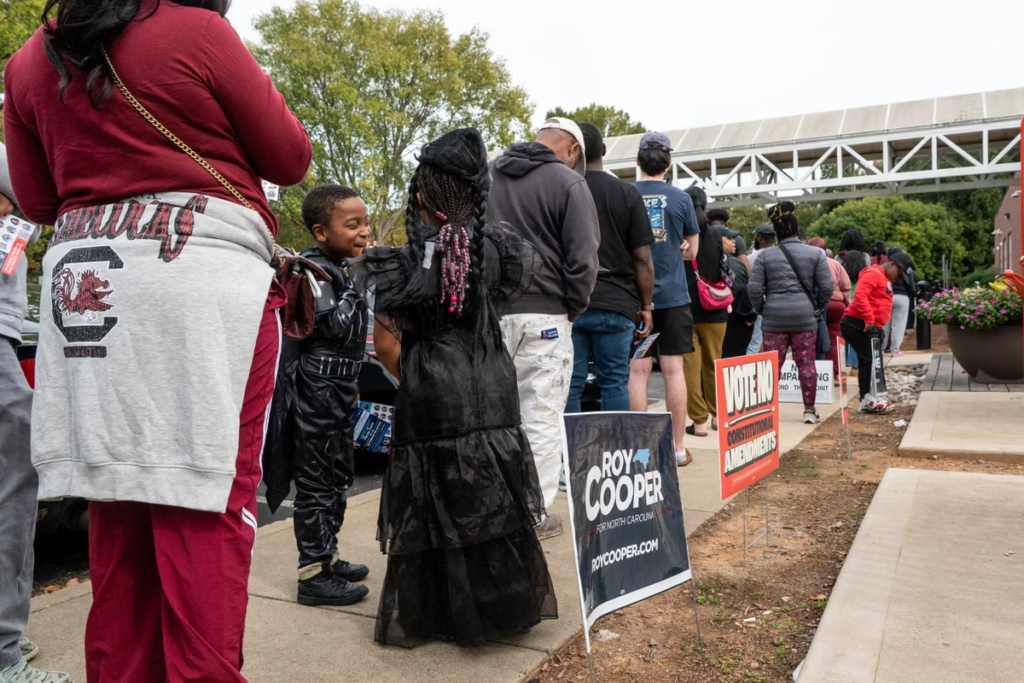
Voters across the United States are casting ballots in record numbers as the midterm elections approach this Tuesday. Analysts suggest this surge in early participation may reflect significant voter dissatisfaction regarding Republicans and the influence of Donald Trump.
Turnout has been notably high in states facing competitive Senate races that are expected to determine control of the chamber. In North Carolina, residents established a new record for early midterm ballots, with WRAL reporting that over 1 million Democrats have participated compared to 679,000 Republican voters.
Texas saw 7.6 million citizens vote early, setting a record for a midterm cycle, while South Carolina also reached a record high with nearly 1 million early voters. Georgia experienced similar trends, with more than 2.8 million people voting early—a 13% increase over the record-setting 2022 midterms, according to data from the Atlanta Journal-Constitution.
Additional states including Maine, Kansas, and Michigan have reported early voter turnout increases exceeding 30% compared to the 2022 midterms, as noted by the Associated Press. This broad participation underscores a shift in engagement levels ahead of the final day of voting.
National data from the University of Florida’s election lab indicates that Democrats are currently flexing more early voting strength than their counterparts. Democrats account for 43% of early ballots cast, whereas Republicans represent 31% and independent, unaffiliated voters make up 25% of the total turnout.
University of Florida political scientist Michael McDonald suggested to Axios that the heightened participation among Democrats might function as a “referendum on Trump.” This sentiment aligns with broader polling data reflecting a preference for Democratic candidates.
A recent poll from PBS News, NPR, and Marist shows 52% of voters favor the Democratic congressional candidate in their district, while 44% support the Republican contender. This gap highlights a divide in voter motivation and enthusiasm across the country.
Explaining the trends, Emory University professor Bernard Fraga noted that even steadfast Republican voters have expressed diminished enthusiasm when considering the current state of the economy. Fraga told Time that the available data suggests Democrats are currently mobilized to a much greater degree than Republican supporters.