Hospital Apologizes After Sending Grieving Mother Home With Stillborn

A woman from North Tyneside was sent home from the hospital while still carrying her deceased baby and instructed to book an appointment later that week to deliver the child. Danielle Brown, 31, had previously been wrongly discharged from the hospital despite suffering from pre-eclampsia, a condition that can be life-threatening. After returning to the facility because she remained unwell, medical staff discovered that her unborn daughter, whom the couple had named Maisie, had died. Warning: This article contains themes and images some readers may find upsetting.
Reflecting on the traumatic moment the scan revealed the loss, Danielle recalled the silence in the room as the monitor was turned away. She turned to her partner, Anthony Miller, 34, and told him she believed their daughter had passed away. When medical staff confirmed the baby had died, rather than proceeding with an immediate delivery, they provided Danielle with a telephone number and sent her home, telling the couple to call on Friday morning to schedule a slot to give birth. I was just over the moon, I couldn’t be happier,” Anthony said. Maise had a normal scan at 16 weeks. She remembers turning to her partner and saying: “I think she’s gone.
For Anthony, the experience was harrowing. He described the pain of returning home and lying in bed, feeling Maisie move while knowing she was no longer alive. Two days later, after a 10-hour labor, Danielle gave birth to Maisie. She described the delivery as a bittersweet experience, noting that her daughter appeared perfect. She lamented that her first experience of holding a child was holding her stillborn daughter, adding that no mother should have to endure the process of being sent home while carrying a baby who has died.
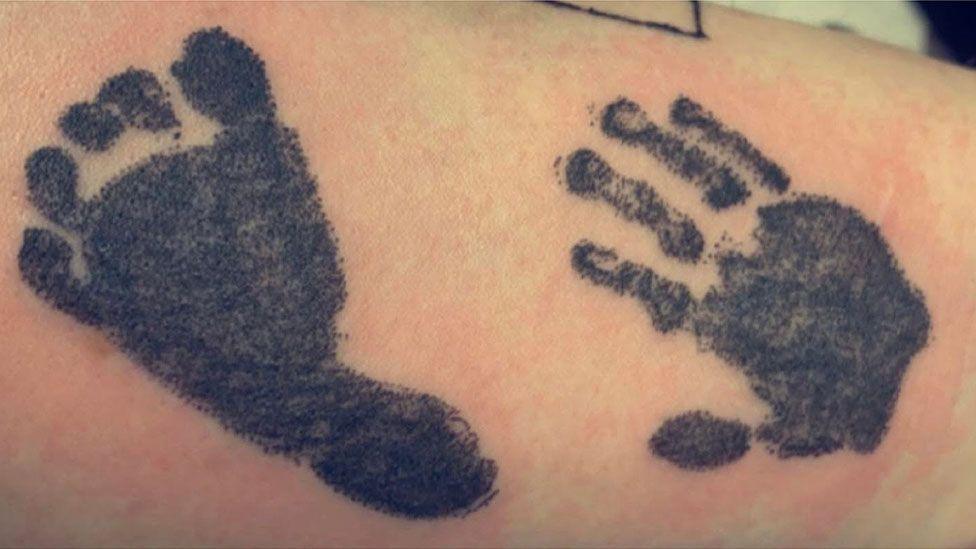
The couple experienced further distress upon leaving the hospital, as they had to walk past other parents who were leaving with their newborn babies. Danielle and Anthony have since called for hospitals across the UK to provide alternative, private exits for bereaved parents to avoid such painful encounters. The couple now carries the memory of Maisie with them, having obtained tattoos of her hand and footprints.
The events followed a series of clinical errors beginning in February 2023.
After Danielle experienced swelling, a common sign of pre-eclampsia, she visited the Northumbria Specialist Emergency Care Hospital.
Medics noted concerns regarding Maisie’s heart rate and advised an emergency caesarean section. According to maisie’s heart rate had dropped and a midwife ran in and, ‘don’t panic, but I need to pull the emergency cord – you’re having your baby’,” Danielle said.
Although she was transferred to the Royal Victoria Infirmary (RVI) in Newcastle, the surgery did not occur.
A consultant initially stated she would remain in the hospital, but a different doctor later discharged her.
Within 24 hours, she returned to the unit feeling unwell, where she was initially told she likely had a stomach bug before the scan confirmed the tragic loss.
Faisal Ali, a legal executive at Irwin Mitchell, stated that the trust admitted Danielle should not have been discharged on February 14 or 15, 2023. He noted that if she had remained under hospital supervision, monitoring would have necessitated an earlier delivery, which could have allowed Maisie to be born alive. He emphasized that the case underscores the severe human cost of such care failures. But, seven months into her pregnancy in February 2023, Danielle woke up feeling unwell.
In response to these findings, the Newcastle Hospitals NHS Trust offered a heartfelt apology and accepted that its care fell short of expected standards. Ian Joy, the trust’s executive director of nursing and midwifery, explained that a 2023 review led to improvements in urgent assessments for maternity patients presenting with unexpected complications, as well as the implementation of faster escalation procedures. An NHS England spokesperson also addressed the incident, labeling the care failings as unacceptable and stating that families experiencing such losses should receive full support from specialist teams to make informed choices about their care. We improved urgent assessment for women who come to our maternity services with unexpected symptoms or suspected complications and introduced quicker escalation procedures when there, following a detailed review in 2023.