Dubai Records Dhs473 Billion Real GDP in H1 2026


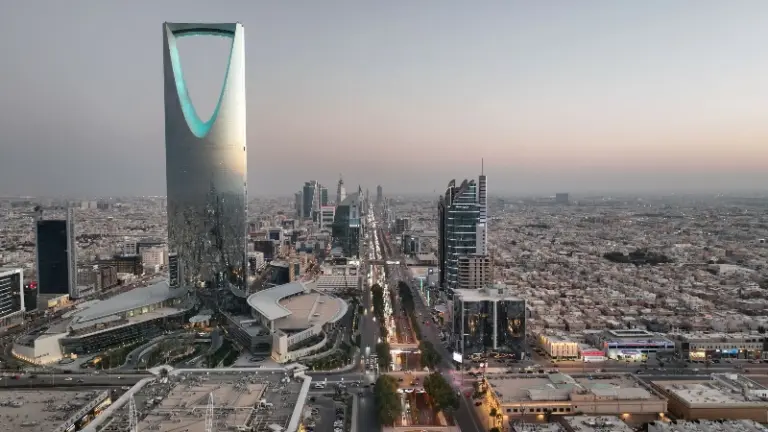
The Government of Dubai has officially released the emirate’s economic performance data for the first half of 2026, revealing a real GDP of approximately Dhs473 billion. These findings, issued by the Dubai Data and Statistics Establishment at Digital Dubai, illustrate an economy navigating a volatile global environment with a resilient and diversified base. And to supporting planning, anticipating trends, and evidence-based decision-making.”, the value of this data is not limited to measuring economic performance; it extends to enabling government and business to understand transformations more deeply.
When measured at constant prices, the GDP saw a modest contraction of 2.3% compared to the Dhs484 billion recorded during the same period in 2025. Conversely, GDP calculated at current prices reached approximately Dhs505 billion, marking a positive growth rate of 0.2%. This performance, according to officials, confirms the importance of sectoral diversity in maintaining economic stability.
Financial and insurance activities served as a primary engine of growth, recording an 8.8% real increase. This sector’s value added rose to roughly Dhs65.9 billion from Dhs60.6 billion in the first half of 2025, effectively increasing its contribution to the overall GDP to 14%, up from 12.5% previously. At current prices, this segment grew by 8.1%, contributing Dhs64 billion in value. Financial and insurance activities at 14%, and real estate activ, the results showed that the three largest economic activities in terms of contribution to real GDP during H1 2026 were wholesale and retail trade at 20.5%. Financial and insurance activities at 14%, and real estate activities at 11.8%, followed by transportation and storage at 10.7%, the results showed that the three largest economic activities in terms of contribution to real GDP during H1 2026 were wholesale and retail trade at 20.5%.
Significant gains were also reported in the human health and social work sector, which saw a 14.3% jump in real growth and a 16.7% rise at current prices. Value added for this sector reached approximately Dhs6.2 billion in constant prices, up from Dhs5.4 billion the year prior. Furthermore, electricity, gas, water supply, and waste management activities posted a 5.4% growth rate.
The construction sector contributed substantially to the economy, recording 2.4% real growth with value added at constant prices hitting approximately Dhs33.2 billion. At current prices, the sector expanded by 8.6% to reach a value added of Dhs35.3 billion. Simultaneously, the information and communication sector maintained upward momentum, with a 2.7% growth in constant prices and a 1.6% rise at current prices, bringing its constant price value added to Dhs24.7 billion. Alongside continued expansion in information and communication, reinforces Dubai’s position as a platform for capital, enterprise and innovation, while growth across other high-value activities reflects the breadth and resilience of the wider economy, the 8.8% growth in financial and insurance activities.
Real estate performance presented a mixed picture; while the sector grew by 5.4% at current prices to reach a value added of Dhs65.1 billion, it experienced a 2.5% decline at constant prices, settling at Dhs55.8 billion. Meanwhile, the manufacturing sector remained relatively stable, with its value added at current prices hitting Dhs24.1 billion—a 0.5% annual increase—while constant prices reflected a minor 0.9% dip to Dhs23.7 billion.
Additional contributors to the economic landscape included government services, which grew by 2.9% at constant prices and 5.7% at current prices. Education activities also showed positive results, with a growth rate of 1.2% at constant prices and 1.5% at current prices.
Helal Saeed Almarri, Director General of the Dubai Department of Economy and Tourism, stated that the H1 2026 results demonstrate the emirate’s adaptability. He noted that the performance highlights an economy structured to weather global uncertainty, emphasizing that Dubai is moving into the second half of the year with clear momentum and a focus on accelerating investment, innovation, and talent attraction under the Dubai Economic Agenda, D33. The measures introduced over recent months have further strengthened Dubai’s operating environment and created a solid foundation for investment-led growth through the second half of 2026 and beyond.”.
Hamad Obaid Al Mansoori, Director General of Digital Dubai, stressed that the breadth of the sectoral base remains a core strength. He asserted that global transformations necessitate continued investment in high-value future sectors and the development of an integrated economic ecosystem that allows businesses and talent to thrive. Importantly, the continued year-on-year growth achieved across a number of strategic and future-focused sectors demonstrates the strength and depth of Dubai’s economic fundamentals and the effectiveness of our continued focus on the sectors that will shape our long-term growth.
Digital transformation and artificial intelligence continue to function as vital drivers for economic competitiveness and efficiency, according to Al Mansoori. He emphasized that Dubai is actively building a digital ecosystem to enable sectors to navigate modern economic shifts successfully.
Younus Al Nasser, Chief Executive of the Dubai Data and Statistics Establishment, explained that the variability in performance across sectors underscores the need for evaluating economic indicators through an integrated lens. He noted that his department is committed to refining the national accounts and economic data ecosystem to provide a comprehensive view of Dubai’s economic size and internal dynamics. And to make use of available sources and data to enhance the accuracy and comprehensiveness of indicators, he added: “We continue to develop the national accounts and economic data ecosystem in Dubai in line with the best statistical standards and methodologies.
These figures underscore the strategic importance of the Dubai Economic Agenda, D33, which aims to further enhance the competitiveness of the business environment and secure new pathways for growth. Despite external pressures, the emirate’s emphasis on diversifying its economic base continues to provide a buffer against rapid global changes, ensuring ongoing development across multiple high-value sectors. These efforts support its economic objectives and reinforce its ability to adapt to changing conditions and turn them into opportunities. We are confident that the foundations being built today will enable Dubai to emerge from this period with even greater momentum and continue its trajectory of sustainable growth well into the future.”. Strengthen market access and deliver the infrastructure, talent and services companies needed to establish, invest and scale, we are working closely with partners across the government and industry to continuously enhance the business journey.