Unlocking the Mystery of New Zealand’s Jungle-Dwelling Tawaki

Tucked away in the misty, remote fjords of New Zealand’s South Island, scientists are working to track one of the world’s most elusive birds: the tawaki, also known as the Fiordland crested penguin. Characterized by their striking yellow eyebrows and standing about half a meter tall, these birds are frequently described as “ghosts” due to their secretive and enigmatic nature. But this penguin has developed a clever exit strategy – digging multiple tunnels to elude its captors. Clockwise from top left: A tawaki taking shelter. A tawaki swims in Charles Sound in Fiordland.
Dr. Thomas Mattern, a research fellow at the University of Otago and chair of the Tawaki Project, notes that the species defies traditional penguin behavior. Since founding the volunteer-based project in 2014 alongside his wife, Ursula Ellenberg, Mattern has worked to shed light on a species about which almost nothing was known previously. He characterizes them as “proper jungle penguins” because they nest exclusively within dense rainforests, often at high elevations, rather than in the open colonies typical of other penguin species. You throw it all out of the window.”, what we know about penguins. “When you think you have them nailed down, you go to a different fjord, and they show behaviour that just does not conform to any of the ideas you have developed so far,” Mattern says. According to “These emaciated tawaki, that have just, Goodbye to their chicks, hop in the water and travel halfway to Antarctica, which makes absolutely zero sense because there should be more than enough food in the water just outside their breeding area,” Mattern says.
The Tawaki Project has engaged in an intensive effort to map these creatures. In September, the team identified 93 nests across two Fiordland islands, bringing their total to 1,200 nests mapped across nine fjords over the last 12 years. This comprehensive survey suggests the population is approximately three times larger than previously estimated. In 2020, this improved data led the International Union for Conservation of Nature to reclassify the tawaki from “vulnerable” to “near-threatened,” with current mature population estimates ranging between 12,000 and 15,000. According to its mapping shows the tawaki population is roughly three times bigger than earlier surveys suggest,, Mattern, pictured below at Precipice Cove. And supported by local volunteers, such as, the Tawaki Project is funded by public donations and international grants. In 2020, the International Union for Conservation of Nature’s Red List moved tawaki up in status from “vulnerable” to “near-threatened” because the researchers were able to develop a better picture of their populations, estimated to be in the region of 12,00 to 15,000 mature birds.
Capturing data from the birds is a difficult task. The penguins often create elaborate, multi-tunnel burrow systems to evade researchers. Dr. Mattern describes the frustration of tracking individual birds, noting that the team recently spent four days recapturing a single female to retrieve a tagging device. To succeed, the researchers had to seal all exits surrounding her nest. “We plugged all the holes around the nest so that it could not escape, until we finally could recover that device,” he adds. Researchers Owen Dabkowski and Mandy Abernethy explore a nest on Eleanor Island.
The species also exhibits puzzling migratory and feeding patterns. Before their annual “catastrophic moult,” where they shed and replace their entire coat of feathers, the birds must increase their body mass significantly. Despite the food-rich waters near the fjords, tawaki embark on an arduous 5,000 to 7,000km round trip toward the sub-Antarctic region to feed. Dr. Mattern observes that this behavior appears to contradict logic, effectively forcing the penguins to run a marathon while attempting to gain weight, likely driven by ancient, deep-seated instincts. While others hunt in the ocean, some groups fish entirely within the fjords.
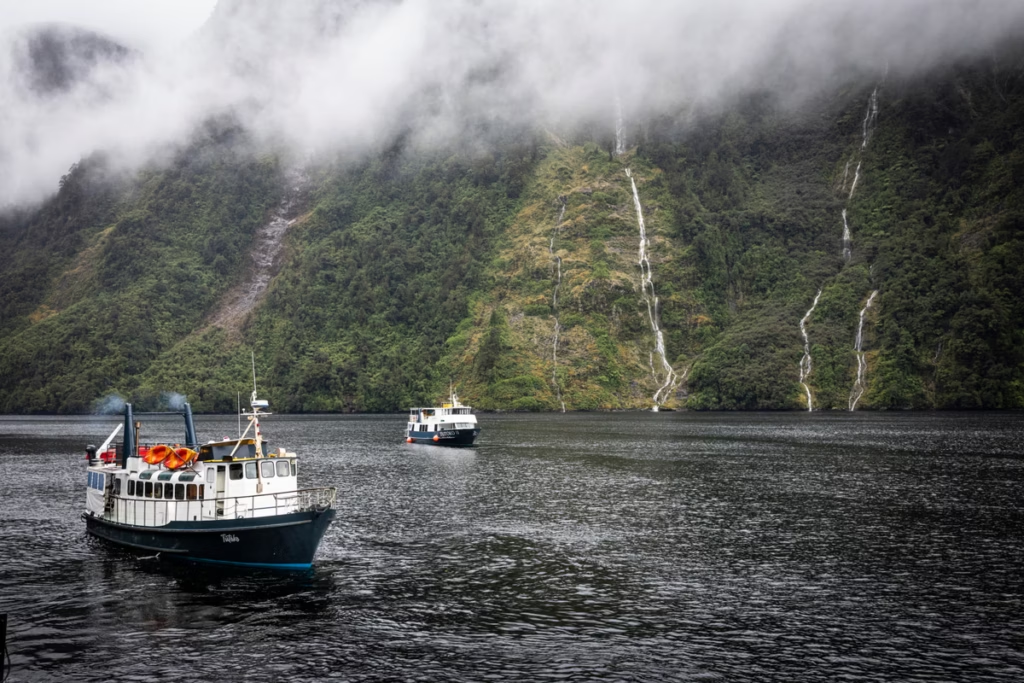
Fieldwork has been bolstered by local support, including tourism operator Richard Abernathy, whose talent for locating nests has earned him the nickname “sniffer dog.” Abernathy provides his boat and time for the expedition annually. Since 2018, the team has scoured the landscape to track the birds’ survival rates.
As the researchers continue their work, they remain focused on determining the long-term stability of the population. While they have made significant progress in understanding the tawaki, threats such as commercial fishing practices persist. Dr. Mattern emphasizes that the project remains committed to monitoring these birds closely, noting that if the population trends shift downward, the team is prepared to take necessary steps to improve the situation for the species. In a first for the species, Tawaki Project researchers are conducting long-term population counts, unlocking secrets about the bird’s breeding and foraging habits, and what threats they might face. “If they’re going down, then we need to kick into gear to improve the situation for them.”.