UK Targets Eritrea With Visa Restrictions Over Migrant Returns

Home Secretary Shabana Mahmood has initiated a crackdown on Eritrean diplomatic staff following the country’s refusal to accept the return of individuals with no legal right to remain in the UK. Starting Thursday, Eritrean diplomats will be prohibited from traveling more than 60km outside of London without prior authorization, mirroring existing restrictions imposed on British officials stationed in the Eritrean capital, Asmara. Additionally, fast-track visa services for VIPs have been suspended. The Eritrean embassy in London has been contacted for comment.
The move follows the government’s accusation that Eritrean authorities “abruptly” withdrew cooperation earlier this year. “Eritrea has had every chance to accept the return of criminals and those with no right to be in the UK,” Mahmood stated, adding that she would not hesitate to apply further measures against any nation that refuses to cooperate with British returns policies.
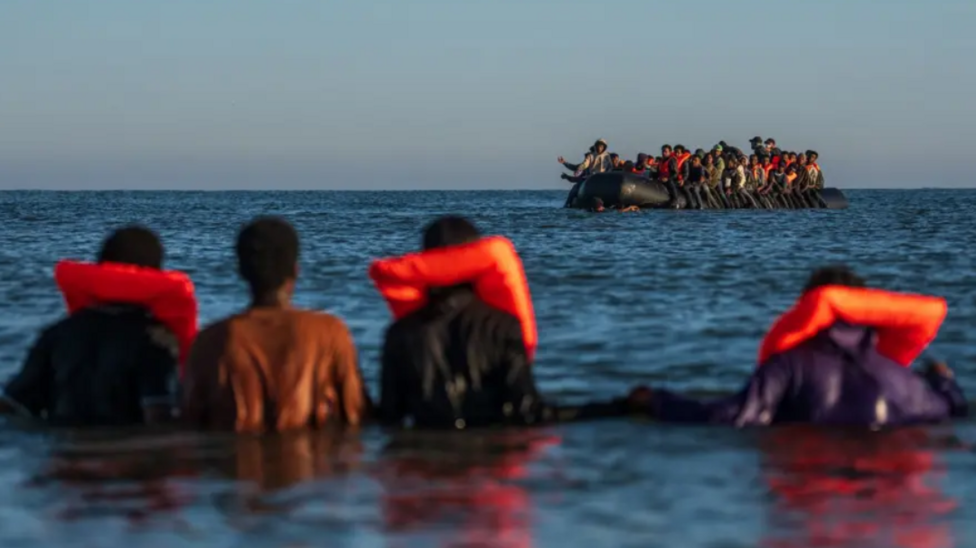
Data from the House of Commons Library indicates that Eritreans represented the most common nationality among small boat arrivals in the 12 months leading up to June, accounting for 18% of the total. Government figures show that over 20,400 people have crossed the English Channel by small boat so far this year, marking a 40% decrease compared to the same period in 2025. She added that about 1,400 people were initially refused asylum, but that this number would reduce after appeals.
Critics, including Dr. Madeleine Sumption of the Migration Observatory at the University of Oxford, have questioned the efficacy of this strategy. She noted that many Eritreans are asylum seekers fleeing a one-party state characterized by mandatory military conscription and a lack of independent media. According to Sumption, the vast majority of Eritrean asylum claims—roughly 84% at the initial stage—are successful, rendering the government’s push for removals largely ineffective. Most Eritereans who come and claim asylum are not removable at all – the government would never be in negotiations to remove them because 84% are successful at initial decision; more will be successful on appeal. Eritrea has never held an election since independence from Ethiopia in 1993 and there is no independent media. Often without trial, critics of President Isaias Afwerki have been arrested and jailed for many years.
Furthermore, Sumption warned that the UK might hesitate to apply similar pressure to other major source countries, such as India, Pakistan, or Bangladesh, due to the potential for significant economic and diplomatic repercussions. “The collateral damage of a ban on visas for those countries when you have so many international students coming… would be much greater than a country like Eritrea,” she observed. Only four religions are permitted in the country â Orthodox Christianity, Sunni Islam, the Roman Catholic Church, and the Evangelical-Lutheran church of Eritrea â and followers of other religions have been locked up for years on end.
The government’s focus on returns is part of a broader strategy, which earlier this year saw threats of visa penalties against Angola, Namibia, and the Democratic Republic of Congo (DRC). Restrictions against the DRC were eventually lifted after cooperation improved, while Angola and Namibia reached agreements prior to the implementation of any formal sanctions.
Returns from the UK, which can be enforced or voluntary, totaled 40,605 between July 2025 and June 2026, an 8% increase from the previous year. Of these, 5,962 individuals had criminal convictions, 12,568 had previously lodged asylum claims, and 3,310 had arrived via small boats. Notably, Indian nationals accounted for 27% of all returns during this period. Ministers have previously pressured other countries into accepting returns by threatening visa bans. According to eritrea is one of the major countries of origin for asylum seekers coming to the UK – we had roughly 7,000 asylum applications in the last year of data, roughly 8% of the total,” she, Radio 4’s Today programme.
The government continues to manage returns through various channels, including independent departures and a previously trialed “one in, one out” arrangement with France. Under that specific pilot scheme, which concluded in September, the UK returned 1,087 people to France as of June 30, 2026. Independent returns, where individuals leave the country without official government assistance, constituted 34% of all departures during the most recent 12-month data cycle.