Ukraine’s Reliance on US Support Amidst Shifting Geopolitics

The relationship between Washington and Kyiv has entered a turbulent phase marked by deep-seated tensions. President Donald Trump has publicly criticized President Volodymyr Zelensky for failing to negotiate an end to the war, while the US administration has increasingly leveraged economic, military, and political pressure to push for a shift in strategy. Recently, the US attempted to advance a peace process by sending an envoy to Norway and Russia, though the effort concluded with only a plan to resume trilateral discussions.
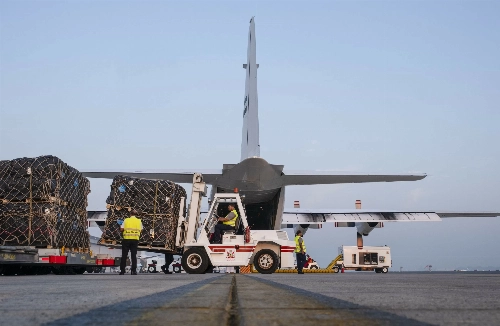
A critical factor in this dynamic is the halt of new US aid packages, which began at the start of 2025. Data from the Kiel Institute for the World Economy indicates that the US remains the largest single donor since the 2022 invasion, having provided at least $131.5 billion. However, the European Union has since surpassed the United States, contributing a total of $228.5 billion as a bloc. Within the EU, Germany, Denmark, the Netherlands, and Sweden have emerged as primary military donors, with the UK and Norway also providing significant support. Much of this European aid is contingent on purchasing US-made equipment, which ultimately requires Pentagon authorization, giving the Trump administration continued leverage over the supply chain.
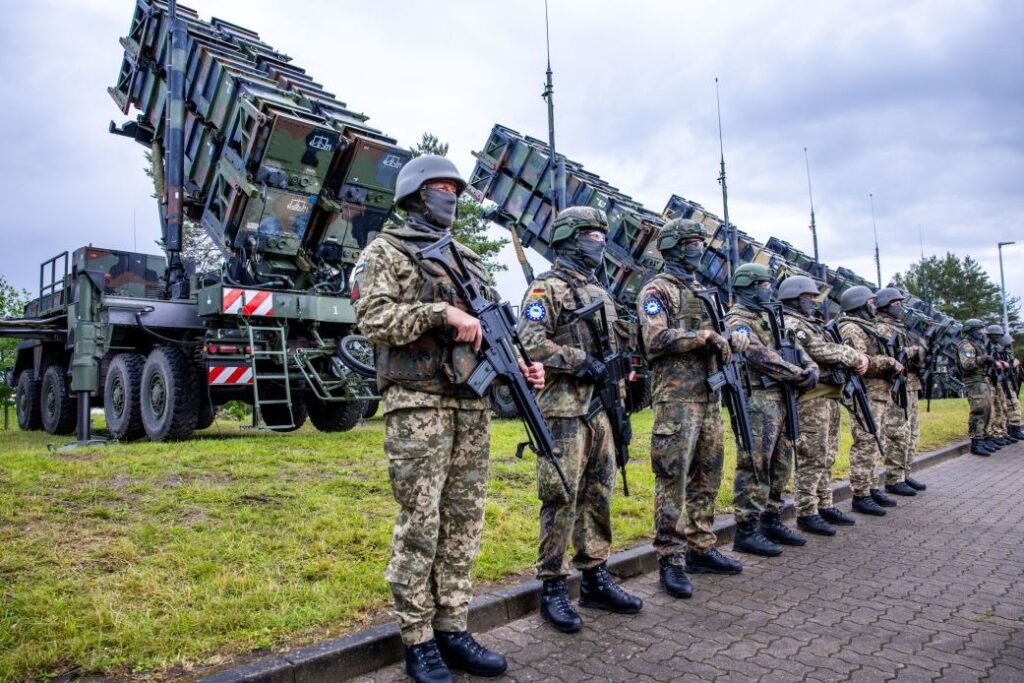
Kyiv currently faces severe shortages of high-end defensive systems, most notably Patriot interceptors. Following a period where Ukraine exhausted its supply, the country has become increasingly vulnerable to ballistic strikes. Recent attacks on Kyiv saw no interceptions, signaling critically low stocks. Zelensky has explicitly stated that Ukraine’s two primary needs from allies are the maintenance of sanctions against Russia and the provision of advanced missiles. Analysts note that while this supply chain is lucrative for American defense firms, current administrative hurdles have delayed delivery, heightening the strain on front-line defenses. Meanwhile, deadly Russian attacks continue, as Ukraine raises concerns about cracks in support from the US. Since then, Europe has picked up the tab and Kyiv has built up its own defense industry at a rapid pace. Analysts say it’s unlikely that any slow-down or blocking of purchases would continue for a long time, given that those weapons orders are a boon for American defense companies. Any further disruptions or restrictions to US-backed systems are likely to hit Ukraine incredibly hard, experts said, in the short term.
The dependence on American technology extends beyond hardware to sensitive systems like the Starshield satellite internet—a military-grade version of Starlink.
Despite claims from Trump that access had been restored, Ukrainian officials report that the service remains restricted. These limitations, which disrupt the functionality of high-speed military ordnance, have hindered the use of interceptor drones and complicated operations across the front line. Max Bergmann, director of the Russia program at the Center for Strategic and International Studies, characterized the current situation as a sign that the United States cannot be relied upon, warning that this instability causes severe civilian and economic hardship, even if it does not break Ukraine’s resolve. According to “That is something Europeans don’t have, and they don’t have it because we (the US) have told them for the last 30 years not to develop it … because they can rely on us,”, Max Bergmann, the Russia program director at. “This could be really devastating for Ukraine in the sense that it could cause tremendous economic damage, tremendous loss of civilian life, civilians leaving,” he said. “But I doubt it’s going to actually break Ukraine’. A person familiar with the matter told, the US president asked Musk in a phone call in recent days to restore Ukraine’s full access to the Starshield satellite system. Though, saying in a social media post that “any limits on speed or usage are decided by the US military and ultimately POTUS.”, musk has denied taking unilateral action. According to “We are asking if it’s possible to give us Starshield with normal speed to defend ourselves,” Zelensky, In an interview this week, noting that European allies pay for the satellite internet contract. “If not, okay. “What the administration is doing actually has far larger ramifications for the basic reliability of the US as a technology and defense supplier,” Bergmann added. Including waiving new sanctions on Russia before they could kick in and striking a deal to allow Russia to export diesel, it comes after a number of controversial moves by the Trump administration this month.
Tensions have also surfaced regarding intelligence sharing. Earlier in the week, Zelensky noted that multiple ballistic strikes occurred without the usual air raid warnings because the US did not provide advance intelligence, leading to increased civilian casualties. While the State Department and Trump have denied restricting data flow, Zelensky confirmed by Tuesday that intelligence cooperation had resumed. Beyond battlefield logistics, the diplomatic rift has caused wider geopolitical ripples. Analysts, including Natia Seskuria, warn that Washington’s pressure on Kyiv risks signaling to the Kremlin that Western resolve is fracturing. And can it carry on fighting without it.
Economic disagreements have further complicated the alliance, particularly regarding Ukraine’s strikes on Russian oil refineries, which Trump has blamed for rising fuel prices. Critics like James Lough suggest these strikes have acted as a lightning rod for Trump, who uses them to deflect from other geopolitical issues such as the war in Iran. Furthermore, the administration has explicitly tied the waiver of specific sanctions to the release of detained American Stephen Hubbard, despite prior claims that no such exchanges were being negotiated. As the situation evolves, the strain on the US-Ukraine partnership remains a focal point of concern for European stability. But many of those contracts have been fulfilled, some of the weapons from American manufacturers purchased during the Biden administration are still flowing to Ukraine.