


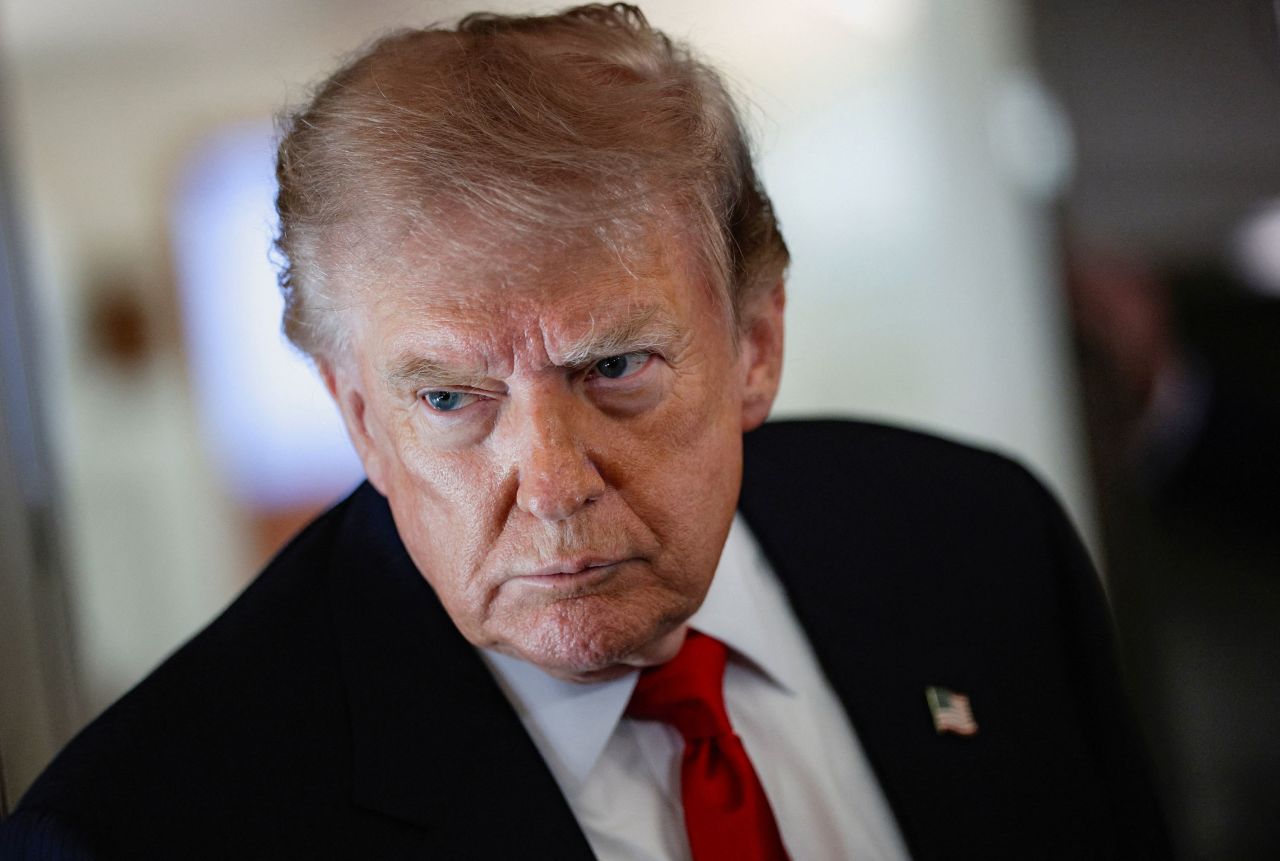
US President Donald Trump promised retribution after the US military said it intercepted a “surprise attack” by Iran on its forces, ending days of relative calm in the Middle East. “We are going to beat the f**king sh*t out of them,” Trump told Fox News. Jordan’s military said it intercepted and brought down five missiles launched from Iran early Wednesday.
• Joint US-Saudi strikes: US Central Command also said Saudi Arabian forces joined strikes against the Iran-allied Popular Mobilization Forces (PMF) in Iraq. The PMF said at least 20 people were killed. So far, Saudi Arabia has largely resisted being pulled fully into the Middle East conflict.
• Energy shock: Oil prices rose in the wake of the renewed fighting. Tankers are looking for new shipping routes, as transits of the Bab al-Mandeb Strait have sharply fallen since a Houthi blockade against Saudi ports was announced and Strait of Hormuz traffic remains very low.
The Trump administration on Wednesday imposed sanctions on two Iranian firms accused of supporting a protection racket in the Strait of Hormuz.
Persian Gulf Marine Insurance Company and HormuzSafe Marine Services Authority are “integral to an Islamic Revolutionary Guard Corps (IRGC)-backed extortion scheme that forces commercial vessels to purchase mandatory maritime ‘insurance’ to transit the Strait,” the US Treasury Department said in a press release.
Re-establishing free and open transit through the key waterway remains a thorny issue as Iran seeks to maintain its control over the strait.
The Israeli military has accused Hezbollah of violating a ceasefire in Lebanon, blaming the Iran-backed militant group for an attack on an engineering vehicle in the south of the country.
“This incident constitutes a blatant violation of the ceasefire agreement in Lebanon by the Hezbollah terrorist organization,” the Israel Defense Forces said. No injuries were reported.
Earlier Wednesday, Lebanon’s state-run National News Agency reported that Israeli forces were setting fire to homes in Qantara, South Lebanon.
Israel and Lebanon last month signed an agreement that aims to transfer control of Hezbollah-dominated territory in southern Lebanon from the IDF to the Lebanese military, but both the IDF and Hezbollah have continued to trade blows.
Lebanon was also a key part of the ceasefire agreement between Iran and the US that has now collapsed.
US President Donald Trump warned Tehran was “going to get a beating” for an attempted Iranian attack on US forces in the Middle East. Speaking to Fox News today, the US president said, “We are going to beat the f**king sh*t out of them.”
It comes hours after joint strikes by Washington and Riyadh against Iran-backed militias in Iraq, in response to attacks on US forces and Saudi oil facilities, fracturing tenuous diplomacy.
Trump added that the US coordinated with Iraqi officials before the assault on Iran-aligned militias in Iraq. Meanwhile, Iraqi Prime Minister Ali al-Zaidi postponed a planned trip to Riyadh, citing “today’s events.”
Oil prices jumped Wednesday morning after President Donald Trump told Fox News that Iran is “going to get a beating” in response to an attempted attack on US forces.
Brent crude rose 5.8%, to $86.82 per barrel. US crude jumped 6.4%, to $84.30 per barrel.
Dow futures were down 330 points, or 0.6%. S&P 500 and Nasdaq 100 futures were each down about 0.1%.
US President Donald Trump promised retribution for an Iranian missile attack that was intercepted by US forces.
“We are going to beat the f**king sh*t out of them,” Trump told Fox News Wednesday morning.
Trump also said the US coordinated with the Iraqis before US-Saudi strikes against Iran-backed Shiite militias in Iraq.
Trump called the militias a “cancer on the world” and did not rule out further action against proxies in the region.
The shipping industry is looking for new options after the recent declaration by the Iranian-backed Houthis that Saudi ships trying to reach the Indian Ocean would be targeted, according to analysts.
Iran’s Foreign Ministry has condemned the US and Saudi Arabia attacks in Iraq, where 20 were killed and 32 wounded, according to Iran’s semi-official Tasnim news agency.
US Central Command’s chief warned troops in a recent letter that sharing cellphone videos online could help Iran strike US bases, a source familiar with the matter told CNN.
Iran has not sought negotiations with the United States over the past two weeks and will not relinquish control of the Hormuz Strait, a senior Iranian official said yesterday, hours before the country launched a fresh round of missile attacks against US bases in Jordan.
US President Donald Trump had claimed that Iran was “dying for a negotiation,” Deputy Foreign Minister Kazem Gharibabadi said. But he painted a very different picture in an interview on Iranian television late Tuesday.
Control of the Strait of Hormuz has become a key issue in the conflict between Iran and the United States, which has insisted that freedom of navigation must be restored through the critical waterway, through which more than one-fifth of the world’s oil is normally carried.
“If the Strait of Hormuz returns to its previous state, our success in this war is not complete,” Gharibabadi said.
US warships were not allowed to come near the Strait, he said, because demining the sea-lanes was Iran’s responsibility according to the Memorandum of Understanding signed last month.
“The Omanis wanted to bring in a country to conduct mine-clearing operations in the southern part of the Strait of Hormuz, but we did not allow it.” Gharibabadi asserted.
He also suggested that Iran retained the right to charge fees for passage.
The MoU obliged Iran “to provide safe passage for commercial ships, free of charge, for only 60 days,” he said.
Negotiations with Oman over a new regime for the Strait have continued through the month, but are yet to resolve the issue.
Iraqi Prime Minister Ali Al-Zaidi has delayed a planned visit to Riyadh, according to a senior source at his office, after the US and Saudi Arabia launched deadly strikes on Iran-backed Iraqi militias overnight.
Al-Zaidi’s visit “has been postponed in light of today’s events,” the source told CNN on Wednesday, adding that the rescheduling “was requested by the Iraqi side.” The Iraqi prime minister was slated to travel to Saudi Arabia on Thursday for an official visit, the source said.
Washington and Riyadh launched strikes on multiple regions of Iraq’s northern and southern flanks on Wednesday, following attacks by Iran-backed armed groups on US forces and Saudi oil facilities. At least 20 people were killed and 32 wounded by the strikes, which hit “logistics and weapons sites,” according to the Popular Mobilization Forces, an Iran-aligned Iraqi militia.
Those strikes have also roiled the wider region, casting fragile diplomatic pathways into disarray and hiking up oil prices.
Former Iraqi Prime Minister Mohammed Shia al-Sudani vehemently condemned the strikes on Wednesday, warning against a “flagrant violation of Iraq’s sovereignty, a dangerous overstep of the principle of Islamic brotherhood” and a “clear breach of international law.”
CNN’s Mustafa Qadri contributed reporting.
A driver holds a fuel nozzle at a gas station in Palo Alto, California, US, on July 21, as oil prices rise due to ongoing conflict in the Middle East.
Oil prices are up almost 4% this morning as traders reacted to news that Saudi Arabia joined the US in striking an Iran-backed militia in Iraq.
Brent crude futures, the global oil benchmark, were up 3.9% to $87.30 a barrel at 4:30am EDT, while US West Texas Intermediate (WTI) crude, the US benchmark, was up 3.8% to $82.30.
US and Saudi forces carried out “targeted strikes” late Tuesday against Iran-backed groups in Iraq blamed for drone attacks on Saudi oil facilities.
The US also said it had intercepted ballistic missiles launched by Iran towards its forces in “an attempted surprise attack”.
Analysts warned that the step-up in hostilities has thrown “cold water on the idea of a swift de-escalation in the Persian Gulf”.
“With Saudi oil infrastructure increasingly targeted, the risk of more prolonged supply disruptions grows,” analysts at ING, a Dutch bank and brokerage, said in a note to clients this morning. “Meanwhile, tanker traffic through the Strait of Hormuz remains essentially halted. While Iran and Oman have held talks on managing vessel transits through the strait, Iran has rejected Oman’s proposal for a 50-50 shipping plan.”
Oil prices were also lifted by news that US crude inventories fell by about 3.3 million barrels in the week that ended July 24, according to Reuters. Official inventory data from the US Energy Information Administration is due later on Wednesday.
A damaged structure at the site of a strike in Bartalla in the northern Iraqi Nineveh province on Wednesday.
At least 20 people have been killed and 32 wounded after US and Saudi Arabian forces conducted joint strikes against Iran-linked “logistics and weapons sites” in Iraq, according to a statement posted on Telegram from the Popular Mobilization Forces.
The attacks targeted PMF facilities in the provinces of Baghdad, Wasit, Nineveh, Basra, Kirkuk, Karbala, and Diyala, the PMF said, causing varying degrees of damage to several military headquarters, vehicles, and equipment.
In an earlier statement on social media, the group’s 30th Brigade said seven airstrikes hit key sites in Nineveh, a region in northern Iraq, at around 3:20 a.m, local time – killing 10 and wounding six.
In response to the strikes, Iraqi Prime Minister Ali Falih Al-Zaidi has convened an emergency meeting of the Ministerial Council for National Security Wednesday, according to a statement from his office.
Members of Iraq’s Popular Mobilization Forces stand near a portrait of Iran’s slain supreme leader Ali Khamenei at the shrine of Imam Hussein on the eve of his funeral ceremonies in the holy Iraqi city of Karbala on July 7.
The Iran-linked group that claims it was targeted by US-Saudi airstrikes Wednesday is part of an Iraqi security apparatus formed more than a decade ago to fight against the Islamic State in Iraq and Syria (ISIS).
The Popular Mobilization Forces (PMF) is an umbrella organization within Iraq’s official security forces, which Iran has increasingly co-opted to wield its influence in the neighboring country. It is mostly made up of Shiite paramilitary groups.
It was established in 2014 as ISIS advanced across Iraq. Calling for Iraqis to volunteer alongside state forces, the government brought new volunteers and existing militias under the PMF umbrella. It played a major role in defeating ISIS and retaking Iraqi territory, before being formally incorporated into the state security apparatus in 2016.
Some powerful militias within the PMF have close ties to Iran’s Islamic Revolutionary Guard Corps and form part of Tehran’s “Axis of Resistance” in the region, along with groups such as Hezbollah in Lebanon, Hamas in Gaza and the Houthis in Yemen. These Tehran-backed PMF groups have frequently launched attacks against the US and its allies in the Middle East.
Jordan’s military said its air defenses intercepted and brought down five missiles launched from Iran early Wednesday.
“The Jordanian Armed Forces continue to fulfill their duty to protect the Kingdom’s airspace and safeguard its security and sovereignty, and will not hesitate to confront any threat to the country’s security or the safety of its citizens,” a military spokesperson said in a statement.
The statement comes after Iran’s Islamic Revolutionary Guard Corps said it launched ballistic missiles at US military targets in Jordan, in a statement reported by Iranian state media Press TV.
Separately, US Central Command said the IRGC launched an “attempted surprise attack” on US forces in the Middle East, though it did not specify where.
The US and Iran – and their respective allies and proxies – traded strikes across bases in the Middle East Wednesday as Trump held “positive and productive” talks with Ukrainian President Volodmyr Zelensky and Israeli Prime Minister Benjamin Netanyahu at the White House.
Iranian attack: The US military intercepted several ballistic missiles fired by Iran in an attempted “surprise attack” on US forces in the Middle East, US Central Command said Tuesday. CENTCOM did not give details on the locations targeted. Oil prices rose 5% after the news.
Joint US-Saudi strikes: CENTCOM also said the US and Saudi Arabia conducted joint strikes against Iran-backed “logistics and weapon sites” in Iraq. Iranian officials condemned the deadly attack – calling it a “violation of Iraq’s sovereignty” and a “highly dangerous escalation.” Officials said several buildings were damaged and “a number of people” killed and wounded.
Diplomatic activity: Trump met with both Netanyahu and Zelensky at the White House over the past two days. White House press secretary Karoline Leavitt described both meetings as “positive and productive,” while the Israeli leader described the meeting with Trump as “one of the best conversations” they’ve had, citing close coordination on Iran and other security issues. All the leaders later attended the funeral for Sen. Lindsey Graham at the National Cathedral.
An Iran-aligned Iraqi militia said several of its bases across Iraq were targeted by US and Saudi airstrikes early Wednesday.
“A number of” people were killed and wounded in the strikes, which also damaged several buildings, according to preliminary information, the Popular Mobilization Forces said in a statement.
“We consider this targeting to be a highly dangerous escalation, a violation of Iraq’s sovereignty, and an attack on its official security institutions,” the PMF said.
The US military and Saudi Arabian forces said they conducted joint strikes against Iran-backed militias in Iraq Wednesday, in response to attacks on US forces and Saudi oil facilities.
Some context: The PMF is an umbrella organization within Iraq’s official security forces, which Iran has increasingly co-opted to wield its influence in the neighboring country. It is mostly made up of Shiite paramilitary groups.
Democratic Rep. Yassamin Ansari joined CNN’s The Lead to discuss the February 28 US strike on the Shajareh Tayyiba school in Minab that left 168 children and 14 adults dead.
Earlier this month, three sources familiar with the matter told CNN that the investigation into the US strike has sat for months with a military command while leaders have held off on ordering a critical, standard intelligence review to help determine what happened.
The United States and Iran remain poles apart on key issues but there have been developments in diplomatic conversations between heads of government.
The key things you need to know:
• White House meetings: President Donald Trump on Tuesday hosted two closed-door meetings with Israeli Prime Minister Benjamin Netanyahu and Ukrainian President Volodymyr Zelensky. White House press secretary Karoline Leavitt described both meetings as “positive and productive,” while Netanyahu hailed “one of the best conversations” he and Trump have had, citing close coordination on Iran and other security issues. All the leaders later attended the funeral of Sen. Lindsey Graham at the National Cathedral.
• Ukraine-Iran tensions: Ukrainian Foreign Minister Andrii Sybiha said he stressed the need to avoid “unnecessary escalation” in a “frank” call with his Iranian counterpart Abbas Araghchi. Iranian officials have ramped up threats toward Kyiv after a recent attack by Ukraine on what Tehran said was an Iranian vessel in the Caspian Sea.
Ukrainian Foreign Minister Andrii Sybiha arrives at the 135th Session of the Committee of Ministers of the Council of Europe at the Palace of the Republic in Chisinau, Moldova, on May 15.
• Iran’s energy consumption: Israeli Defense Minister Israel Katz said the US has been preventing Israel from striking Iranian energy infrastructure due to economic and energy concerns. Meanwhile, Iranian officials are urging the public to reduce their energy use and warning of possible power outages as Iran has lost around 230 million cubic meters per day of natural gas production capacity since the start of the war, Iran’s Islamic Republic News Agency (IRNA) reported.
• Weapons production: Iran’s defense industry is expanding production and prioritizing air- and sea-based capabilities, a senior Iranian defense official claimed on Tuesday. That’s in contrast to US Defense Secretary Pete Hegseth’s statement in March that Iran’s defense industrial base was nearing “complete destruction” and that its ballistic missile production capacity had been “functionally defeated.” CNN reported in May that Iran was rebuilding its damaged military industrial base faster than expected.
• Strait of Hormuz: Iran’s military warned that any ships belonging to a country or company using frozen Iranian assets will be blocked from transiting the strategic waterway, according to the state-run broadcaster. The warning came after Trump said last week that any damage to ships or cargo “will be paid for by Iranian money that the US has in its possession, and controls.”
CNN’s Aida Karimi, Victoria Butenko, Billy Stockwell, Aileen Graef, Tal Shalev, Mohammed Tawfeeq, Mustafa Qadri, Svitlana Vlasova and Dana Karni contributed to this report.
Have any thoughts?
Share your reaction or leave a quick response — we’d love to hear what you think!
-
 0
0
-
 0
0
-
 0
0
-
 0
0
-
 0
0
-
 0
0