Papua New Guinea Faces National Crisis as Drought Intensifies

Papua New Guinea is grappling with an escalating national crisis as a severe, historic El Niño-driven drought wreaks havoc across the Pacific nation. With as many as eight million people affected, the country is facing a dangerous cascade of consequences, ranging from acute food and water shortages to widespread electricity scarcity and the forced suspension of essential schooling and medical services. Causing a cascade of issues from shortages of food and water, to electricity scarcity and schooling disruption, extreme drought driven by an historic El Niño is affecting as many as 8 million people in Papua New Guinea. Schools and health facilities are being forced to close early because they lack sufficient water to provide basic services. According to resident Theophil Zarack, Many schools and health centres were operating for only half a day, with some clinics no longer accepting inpatients due to a lack of available water. “We have a well that we dug ourselves, but we only use that water for washing.
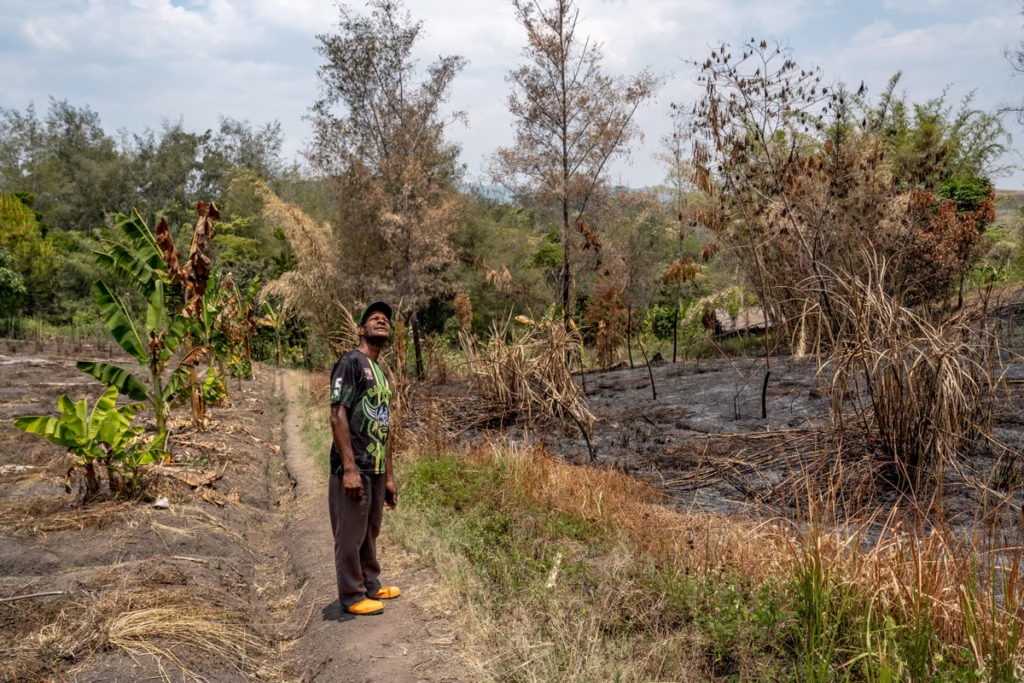
An influential coalition representing churches, trade unions, and local business groups has sounded the alarm, declaring the situation a national crisis. However, observers warn that the government lacks a coordinated plan to shield vulnerable communities from the worsening impacts of the climate pattern. Reports from local leaders confirm that vital rivers and creeks have evaporated, while family-tended gardens—the primary source of nutrition and income for many—have completely shrivelled.
The impact on rural areas is particularly dire. Emilly Meren, a humanitarian projects manager at CARE International, reports that families in the highlands are now rationing food to a single daily meal. This scarcity is sparking localized disputes and placing an immense burden on women and girls, who are often forced to sacrifice their own nutrition to feed their families. Furthermore, women traveling long distances to secure water or food face heightened risks of harassment, with reports suggesting instances of transactional sex emerging as a desperate survival mechanism. “For women and girls, they are expected to do more to support their families,” she said, yet they were “the last to eat because they have to serve others first”. We are hearing stories of transactional sex happening in the community – exchanging sex for money or for food.”.
Meteorological data indicates that this El Niño event is exceptionally powerful, with global heating intensifying its destructive potential. Since August, significant portions of the country have received less than a quarter of their average rainfall. While the National Weather Service officially declared the El Niño onset in June, assistant director Kasis Inape noted that much of the country was already in the grips of a drought by that time. Inape explained that the shifting of warm tropical waters toward the east has effectively starved the region of its life-sustaining rain. According to inape, PNG was one of the wettest places in the world with rain fed by warm tropical waters, but the El Niño had seen those waters shift east “and we’re starved of rain”. According to PNG’s wet season is between November and April and Inape, While some short term relief was forecasted, there were concerns El Niño would shorten the season.
The agricultural strain is severe; subsistence farmers who rely entirely on predictable rainfall are unable to sustain their crops. In Bulolo district, Morobe province, the loss of running water has brought daily life to a standstill. Residents like Martha Zureno describe trekking for miles each day just to secure enough water for drinking and cooking, as local wells have gone dry and gardening has become impossible. Meanwhile, in Enga province, a separate hailstorm recently buried food crops under ice, further complicating the food insecurity crisis. A resident in Leklu village, said: “All our rivers have dried up, including the one behind my house, martha Zureno. Meanwhile, a destructive hailstorm in parts of Enga province earlier this month – not blamed directly on El Niño – buried sweet potatoes under ice, exacerbating the food scarcity issue, according to George Iki, president. My children and I have to walk for miles every afternoon to fetch water for cooking and drinking from the other side.
Urban infrastructure is also faltering.
Port Moresby has entered a period of planned electricity blackouts as falling water levels in dams restrict hydropower generation, a situation that could persist for up to 10 months.
Peter Aitsi, co-chair of the Community Coalition Against Corruption, urged the government to conduct rigorous assessments to address the specific needs of rural populations, which remain the most exposed to the drought’s fallout.
Additionally, the capital has been plagued by thick smoke haze from fires, which scientists attribute to the dry conditions fueled by El Niño. According to aitsi, The capital had been covered in a smoke haze in the past week from fires elsewhere on the island, and in Indonesia to the west, that scientists say have been fuelled by El Niño.
In response to the mounting pressure, Prime Minister James Marape has instructed provincial and district authorities to prepare for a sustained dry season. The government is currently exploring financial maneuvers to bolster disaster response efforts, with Marape confirming that the cabinet is tailoring financial instructions to ensure that local districts receive the necessary assistance to manage the unfolding emergency. The company was working to manage dam releases to protect the city’s water supply.