Ukraine Restores Full Starshield Military Satellite Access

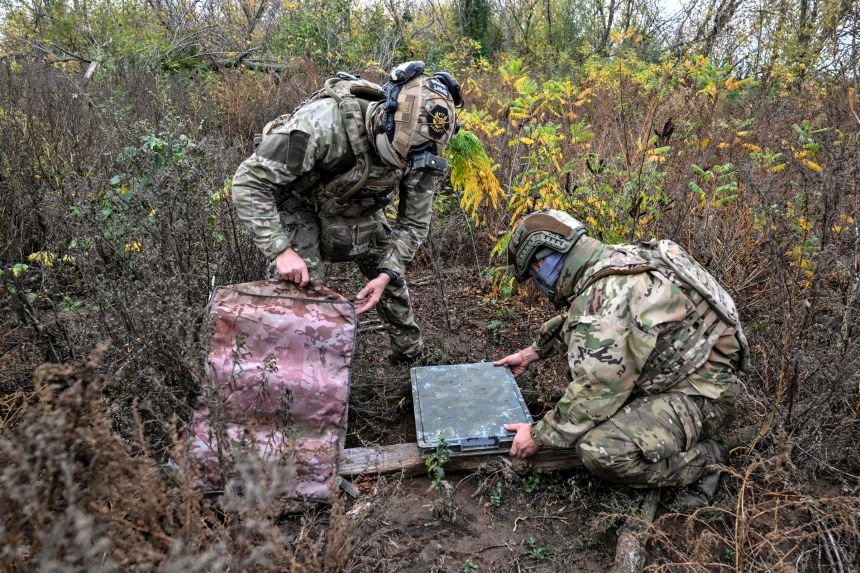
Ukraine has officially restored full access to the Starshield satellite system, according to the nation’s defense ministry on Saturday. This development occurred two days after US President Donald Trump stated that Elon Musk had reinstated the military-grade version of his SpaceX internet service. According to earlier this week, Trump, He was not involved. According to zelensky, He hopes Ukraine will have another meeting with American negotiators in the coming week, which follows his talks with US special envoy Steve Witkoff on Tuesday.
Minister of Defense Yevheniy Khmara reported that monitoring systems are now recording a recovery in connection speeds. He noted that the ministry is observing performance exceeding 400 km/h, describing the current connection as stable, and confirmed they are actively tracking the system’s progress. Ukrainian President Volodymyr Zelensky also verified that both Starlink and Starshield have resumed operations at their pre-restriction speeds, highlighting their critical importance for frontline logistics and the defense against jet-propelled Shahed drones.
A person familiar with the situation previously informed reporters that Trump requested Musk restore the access during a recent phone call. Trump, who had been seeking information about reports of service disruptions from Ukrainian officials, later commented on the situation by stating, “Whether I called or whether somebody else called, doesn’t make any difference, I guess. The bottom line – he put it back.” Both Trump and Musk had previously denied taking unilateral action to throttle the service. Pressed Friday by Alayna Treene on who ordered the slowdown in the first place, Trump said: “I have no idea, but I wouldn’t tell you if I did.”.
The restoration comes after a period where Ukrainian officials reported that restrictions hindered military operations.
Denys Sienik, the charge d’affaires for the Ukrainian embassy in the US, had noted that speed limits were previously set at 100 miles per hour, causing connections to drop during high-speed drone operations. Military officers on the ground had reported significant equipment losses and coordination challenges due to these outages. Despite the restoration of Starshield, localized issues persist; one source in the Donetsk region reported that speeds in their area remained limited to 160 kilometers per hour as of Saturday morning. Up until Friday evening, Ukrainian officials were saying the restrictions still persisted. “Unfortunately, the situation remains the same, and we still have the limits imposed,” Denys Sienik, charge d’affaires for the Ukrainian embassy in the US, told, adding that his country is receiving “mixed messages.”. The restrictions have disrupted any military ordnance moving at high speeds – hindering interceptor drones in defending against Russian attacks and upending Ukrainian military operations in many areas of the front line, Ukrainian officials have said, for more than a week. According to sienik, currently Kyiv’s top diplomat in Washington,, The speed limit is currently set at 100 miles per hour, at which point connection with the drone is lost, making it difficult to intercept fast-moving Russian drones. Russia has been launching jet-powered drones flying at speeds surpassing 300 miles per hour, “which are causing more destruction and claiming the lives of Ukrainians,” he said. According to a Ukrainian Armed Forces officer previously, How the restrictions were complicating Kyiv’s war effort. “It makes coordination difficult; sometimes there are interruptions. The connection drops out for 10 to 15 seconds,” the officer said.
While satellite communications are normalizing, the conflict continues to intensify. President Zelensky recently raised concerns regarding a critical shortage of US-made Patriot interceptors, noting that deliveries are delayed. Russia has maintained a high volume of drone strikes, launching 176 attack drones overnight and throughout Thursday. These assaults have caused significant civilian damage; a tally of local reports indicates at least nine civilians were killed and 76 injured in the last 24 hours.
Energy infrastructure remains a primary target for Russian forces, with strikes across six regions leaving over 500,000 residents without power on Friday, according to the deputy energy minister. The State Emergency Service of Ukraine also reported extensive damage to residential and civilian infrastructure in the Sumy region. Meanwhile, Russia’s Ministry of Defense claimed to have successfully intercepted 443 Ukrainian drones and targeted a railcar depot in Poltava and the Vylkove port. Authorities in Russia’s Nizhny Novgorod region reported that three civilians were injured by falling debris during these exchanges. Victoria Butenko, Lucas Lilieholm, DJ Judd and Lex Harvey contributed to this report.