Supreme Court Denies Trump Bid to Segregate California Mail Ballots

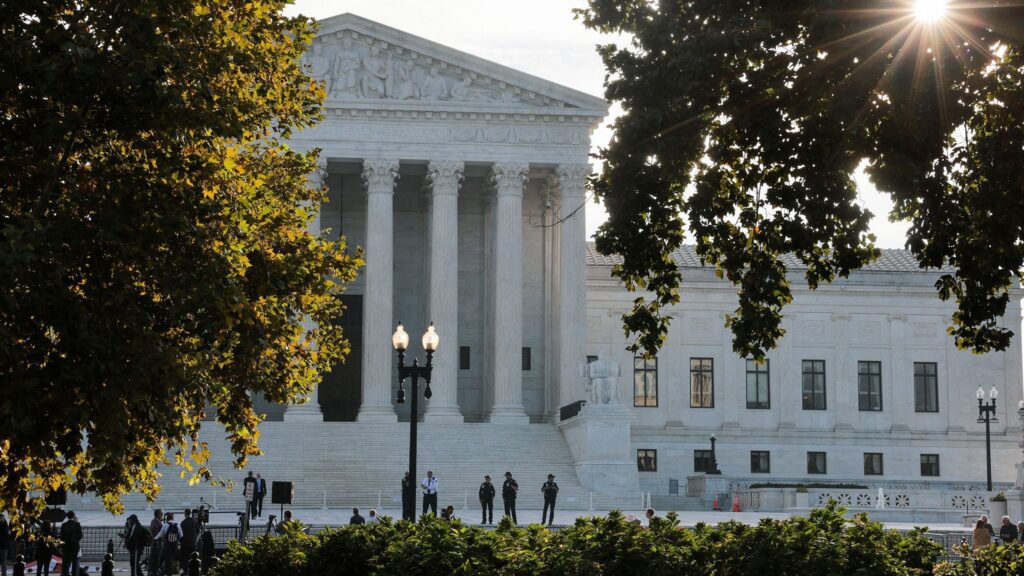
In a swift decision issued on Monday, the Supreme Court denied an emergency request from the Trump administration aimed at forcing California to segregate thousands of ballots. The administration had argued that these votes might have been cast by noncitizens, but the high court rejected the attempt just hours after the filing, without providing an explanation or noting any dissents in its single-sentence order.
This outcome marks a significant legal setback for the administration, which has struggled to gain traction with similar election-related appeals. The decision, handed down on the eve of the midterm election, arrived as an unknown number of mail-in ballots have already been processed across the country. By refusing to intervene, the justices avoided altering election procedures at the last minute—a stance often associated with the “Purcell principle,” which discourages federal judicial interference immediately preceding an election. All sides agree, it would be impossible to separate them, once those ballots are processed.
US Solicitor General D. John Sauer had urged the court to grant what he termed a “modest remedy” of setting aside the ballots flagged by the federal government. According to the administration, over 20,000 individuals registered to vote in California appeared to be noncitizens based on publicly available data. The Justice Department argued that California’s refusal to investigate these voters hindered the enforcement of federal criminal laws prohibiting noncitizen voting. According to “This office has been informed that the United, Has identified more than 20,000 individuals who appear to be registered to vote in California based on publicly available information at the time that information was.
California officials and voting rights advocates strongly opposed the move, arguing that the administration’s claims relied on unreliable methodology and risked disenfranchising eligible voters. Democratic Governor Gavin Newsom praised the ruling, stating that the high court had “firmly slapped down” what he described as a baseless attack on the state’s electoral process. Uzoma Nkwonta of the Elias Law Group, representing parties opposing the suit, noted that every court to review the case had reached a similar conclusion, rejecting the attempt to cast doubt on ballots right before the election. The justices did not ask to see a response brief from California or other parties before ruling – as is their usual practice in high-pro, in another sign that the Supreme Court didn’t take the appeal especially seriously.
The dispute reached the Supreme Court following a ruling by the 9th US Circuit Court of Appeals on Friday, which blocked the federal government from interfering with California’s mail-in ballot processing. In a 2-1 decision, the circuit court concluded that the federal government lacks the authority to dictate state election administration. Judges Mark Bennett and Gabriel Sanchez noted that the risks regarding noncitizen voting were “at best, uncertain” and held that granting the administration’s requested relief would create a “material risk” of disenfranchising citizens. According to “If the United, Believes different procedures are necessary for vote-by-mail ballots, we believe it should take that suggestion to Congress, not the courts,” the appeals court wrote in a 2-1 decision that was issued by US Circuit Judges Mark Bennett, a Trump nominee, and Gabriel Sanchez, who was named to the bench by former President Joe Biden. “Throughout history, federal courts have acted to protect the voting and civil rights of our citizens by enjoining state action that violates the law,” wrote Bumatay, a Trump nominee. “And common sense also tells us that the federal government shouldn’t have to sit on its hands while a state allows the violation of federal law, especially when the integrity of federal elections is at stake.”.
Judge Patrick Bumatay, a Trump appointee, issued a dissent in the appeals court decision. He argued that the administration was seeking only to prevent the mixing of ballots and suggested that federal courts have a duty to act when state actions allegedly violate federal law. Despite this position, the Supreme Court’s rapid disposal of the case—which notably occurred without the court requesting a response brief from California—signaled that the justices viewed the administration’s legal argument as a reach that lacked a strong foundation. Those are arguments that found purchase in lower federal courts that ruled against Trump.
This latest defeat adds to a mixed record for the Trump administration in high-profile election appeals. While the Supreme Court previously allowed the Department of Homeland Security to continue sharing citizenship data with state officials, it has also rejected other administration attempts to reshape election rules, including a failed proposal in September to alter how mail ballots are distributed nationwide. As the legal battle concludes, critics like Jon Miller of the Public Rights Project maintained that the administration continues to press arguments that have repeatedly failed to withstand judicial scrutiny. This story has been updated with additional details.