Louvre Abu Dhabi Exhibition Explores Ancient Indian Ocean Maritime Trade

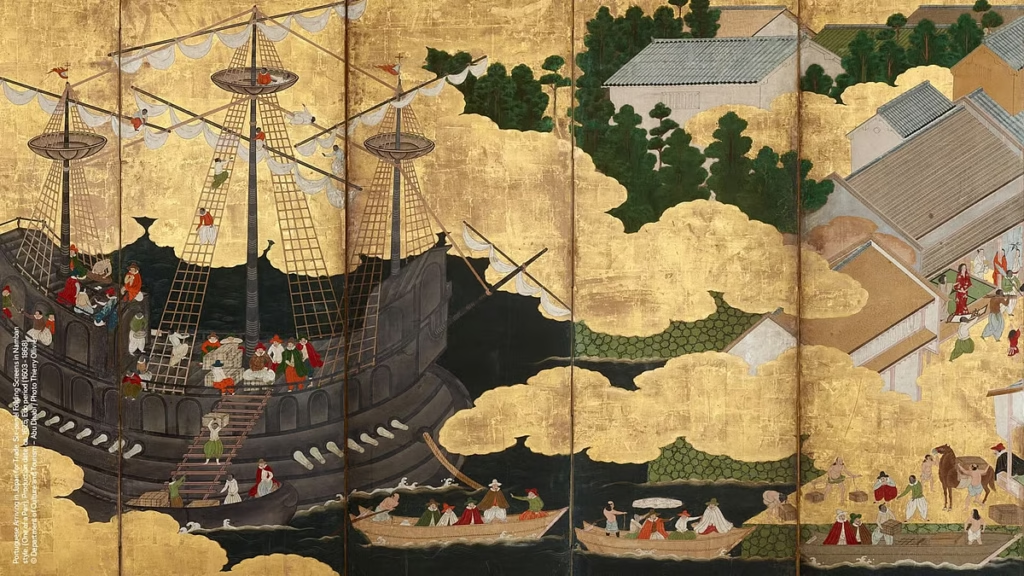
A new exhibition at Louvre Abu Dhabi, titledSpices and Wonders: Sailing the Indian Oceaninvites visitors to explore a millennium of maritime history. The collection, which opened on October 14, 2026, examines how ancient sea routes acted as vital lifelines for trade, exploration, and cultural exchange between distant civilizations across Africa, Asia, and the Middle East. Louvre Abu Dhabi explores 1,000 years of trade across the Indian Ocean and cultural links. And shipwrecks became part of maritime history, not every vessel reached its destination. The exhibition explores the ingenuity and determination required to travel between distant shores, when every voyage involved uncertainty as well as the possibility of discovery, by bringing these stories together. The Middle East, Europe, South Asia and Southeast Asia, the exhibition places the Indian Ocean at the centre of a history shaped by movement and interaction, spanning routes that connected Africa.
Long before modern logistics emerged, sailors navigated the Indian Ocean by relying on stars and an intimate knowledge of marine currents. These voyages moved far more than mere commodities; they facilitated the transmission of ideas, religious beliefs, and artistic traditions, fundamentally shaping the societies that participated in these networks.
Exhibition Details
- Location: Louvre Abu Dhabi, Saadiyat Cultural District, Abu Dhabi
- Duration: October 14, 2026, to February 14, 2027
The exhibition shifts the focus from spices as simple trade goods to the broader human experience of those who facilitated these exchanges.
It showcases diverse artifacts—including ceramics and textiles—that reveal the craftsmanship, aesthetic preferences, and cultural values of their origins.
By examining these objects, visitors can better understand the ingenuity required to navigate open waters and the persistent risks faced by early seafarers.
A significant portion of the display focuses on the evolution of navigational techniques. Early maritime travelers used the stars and wind patterns to map their way across vast, often unpredictable, distances. The exhibition also highlights the physical remnants of these journeys, such as shipwrecked vessels, which serve as historical evidence of both the immense wealth moved through these channels and the dangers inherent in maritime commerce.
This initiative was developed through a partnership between Louvre Abu Dhabi and the Musée National des Arts Asiatiques – Guimet in Paris. This collaborative effort brings together a wide range of perspectives and artifacts, illustrating how the Indian Ocean functioned as a central nexus for a globalized world long before the modern era.
For the UAE, the exhibition serves as a reflective look at the Arabian Peninsula’s long-standing role as a pivotal hub in international trade.
The region’s coastal communities have maintained deep ties to the sea, acting as intermediaries between the East and West. Textiles, ceramics and other objects also travelled between ports, reflecting the tastes, skills and traditions of the communities that produced them.
By presenting these historical routes, the curators illustrate that these paths were not merely for transporting goods, but were instrumental in forging relationships between otherwise disparate cultures.
Looking at familiar items—such as spices, pottery, and cloth—through this historical lens provides insight into the complex supply chains of the past. These objects tell stories of the merchants, sailors, and consumers who participated in an interconnected network that spanned continents.
Beyond the exhibition, recent environmental and maritime developments in the region include For the UAE, the subject also offers an opportunity to reflect on the region’s place within wider networks of maritime trade.
- Wildlife conservation: 43 sea turtles were recently returned to the sea in Abu Dhabi.
- Infrastructure: Abu Dhabi has launched a new wildlife rescue network.
- Maritime logistics: New terminal developments in Fujairah could potentially reduce sailing times by up to five days for commercial vessels.
Important Details
- Get Updates on Topics You Choose.
- Fujairah terminals could cut sailing times by 5 days.