Iranian Operative Directed UK Terror Plot From New York Prison Cell

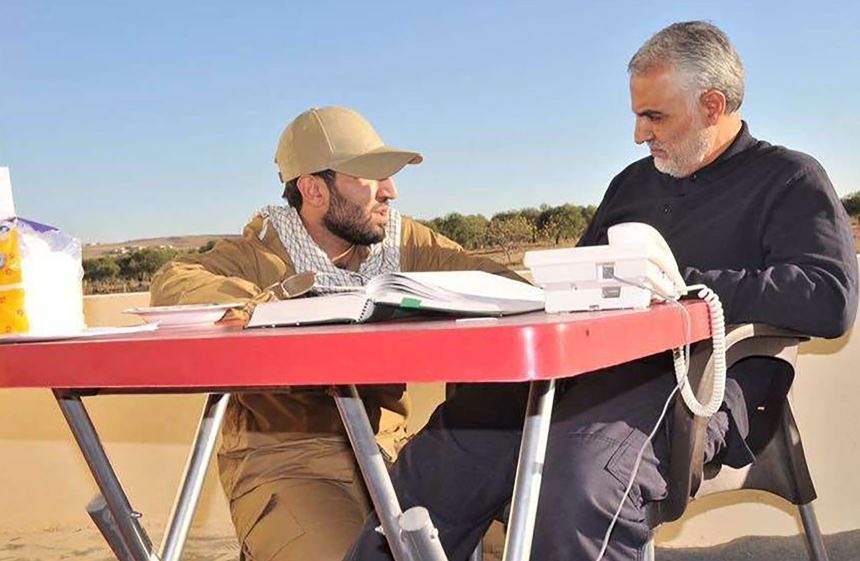
Federal prosecutors have revealed that a commander within an Iranian proxy group orchestrated a failed terror plot against a key United Kingdom air base while being held in a Brooklyn, New York, federal prison. According to a newly unsealed indictment, Mohammad Dawood Al-Saadi, a dual Iranian and Iraqi citizen, allegedly used coded language during recorded phone calls to his family to coordinate an attack on RAF Fairford, a base that hosts US B-1 bombers.
Al-Saadi was already in custody at the Metropolitan Detention Center when he began managing the plot. He had been arrested earlier this year on charges linked to various terrorist operations in the United States and Europe. The indictment, returned by a New York grand jury, names Mohsen Mohajeri, an operative of Iran’s Islamic Revolutionary Guard Corps (IRGC), and Mohammad Ali Al-Hassani as Al-Saadi’s co-conspirators. Both have been charged alongside him.
The conspiracy reached a critical point in September, when British law enforcement identified three suspicious vehicles moving toward the air base. Authorities arrested seven men on suspicion of plotting a terrorist attack, though they were later released under strict conditions after searches of the vans yielded no explosives. Individuals familiar with the investigation indicated that the plan involved using the fuel-filled vans as improvised explosive devices. Several suspects were rearrested in late October after authorities concluded there was a significant likelihood of IRGC involvement.
Investigators allege that Al-Hassani oversaw the early stages of the operation, including ordering surveillance of the base and funding the procurement of vehicles and fuel barrels. He reportedly maintained communication with the drivers as they approached security checkpoints. Meanwhile, prosecutors assert that Al-Saadi used nicknames to instruct his family in Iraq to facilitate the necessary financial transfers and passed directives to Mohajeri regarding planned attacks, which he referred to as “work.” In one July recording, Al-Saadi asked his sister if their “old work” had been delayed; she replied that it was not cancelled.
Before his arrest, Al-Saadi reportedly maintained high-level connections within the Iranian military hierarchy. Prosecutors claim he worked closely with Qasem Soleimani, the former Quds Force commander killed in a 2020 US airstrike, and allegedly functioned as a surrogate son to him. He was also reportedly close to the late Supreme Leader Ali Khamenei, having warned the leader of potential US strikes shortly before Khamenei was killed in February 2026. Khamenei, who ruled Iran for nearly four decades, was killed in the first wave of US and Israeli strikes in February.
Following his initial arrest, Al-Saadi allegedly admitted to agents that he managed media and psychological warfare, as well as strategy and intelligence, for Iranian terror groups. Searches of his devices uncovered photos showing him at intelligence bases alongside military leaders. While facing initial charges for allegedly filming attacks in Europe for propaganda and attempting to hire someone to target a Manhattan synagogue, Al-Saadi has pleaded not guilty and has moved to represent himself in court.
Due to the risk that his communications could lead to violence or property damage, the Justice Department placed Al-Saadi under special administrative measures while in prison. Despite these restrictions, prosecutors argue he continued to attempt to direct operations from jail. In a final September 24, 2026, call cited in court filings, Al-Saadi reportedly directed his family to “give him money so we can do it.” Three days after that communication, the co-conspirators attempted their strike on the air base. Al-Saadi, who was actually communicating with an undercover agent, was detained days later while traveling abroad in Turkey. While imprisoned at MDC, DOJ placed Al-Saadi in a special housing unit and imposed special administrative measures (SAMS) or restrictions barring Al-Saadi from communicating with anyone other than immediate family members and his attorneys. Natasha Bertrand and Zachary Cohen contributed to this report.