US Midterm Results Pose Foreign Policy Crossroads for Trump

The recent US midterm elections have reverberated well beyond domestic borders, creating significant uncertainty for global allies and adversaries. Having spent nearly two years reshaping American foreign policy, President Donald Trump now faces a critical juncture as he grapples with the impact of a domestic political shift on his international agenda. Both are watching to see how an electoral setback at home will shape his actions abroad. Leaving world leaders with a question: Will defeat make him more willing to compromise, or more determined to get his way, but he still has considerable freedom to act abroad.
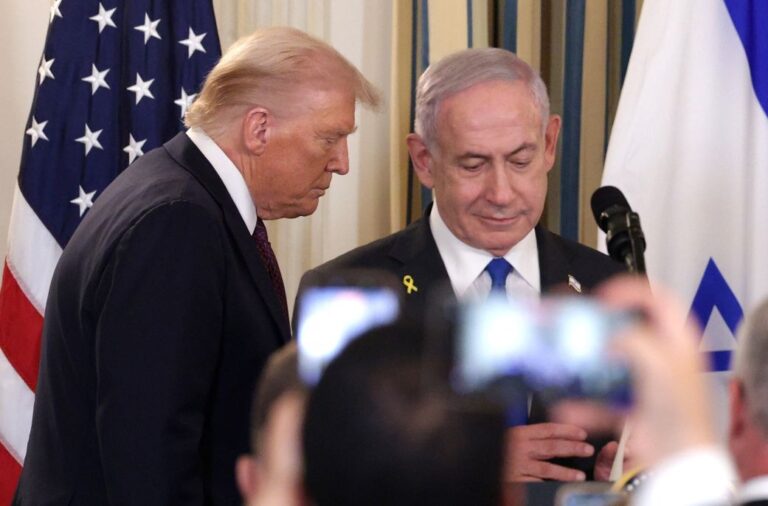
The administration acknowledges the role of foreign conflicts in its electoral performance. In a call with Fox News, Trump conceded that the war in Iran contributed to Republican losses, while Vice President JD Vance was more blunt, stating in an online post that the conflict was the primary reason for the electoral outcome. In response to these developments, parliamentary speaker Mohammad Bagher Ghalibaf warned that if the US government ignores the public will to serve international interests, it will face a nightmare. After eight months of striking the region’s economic lifelines to turn American voters against the war, Tehran has hailed the Republican loss as a public verdict on it. Trump acknowledged that war-driven price hikes played a role. “If the US government betrays their public will to serve international paymasters and blackmailers, it will learn our NO comes with a Nightmare,” parliamentary speaker Mohammad Bagher Ghalibaf, who has led negotiations with the US, wrote on X. More intense strikes are fueling anxiety across the region, and Tehran has warned that its retaliation would be much wider in scope than in earlier rounds, reports that Trump might order new. With segments of the US electorate viewing the joint US-Israel strikes as a war that Netanyahu sold to Trump, the anti-Israel sentiment only hardened during the Iran war. Even now, Netanyahu has been pushing to resume strikes on Iran, which would reignite a war that drove gas prices and the cost of living higher and contributed to Republicans’ devastating midterm performance.
Despite this rhetoric, Iranian Supreme Leader Mojtaba Khamenei dismissed the idea that American election results would fundamentally alter US policy. Tehran continues to prepare for potential conflict while simultaneously pursuing intensified diplomacy. Reports indicate that Trump has expressed conflicting views to journalists, alternating between threats of a severe military response and claims of having no immediate plans for escalation. Analyst Ali Vaez of the International Crisis Group noted that the Iran war has become a political burden for the president, forcing a choice between seeking a face-saving diplomatic deal or escalating militarily to regain leverage.
Diplomatic channels have shown signs of life, with Tehran engaging Qatari mediators to circulate new proposals with Washington. Before the vote, Iran had signaled a willingness to reopen the Strait of Hormuz if specific conditions were met. Experts suggest that while Iran’s leadership may feel vindicated by the US election results, the path to a comprehensive agreement remains complex, as the administration balances the need for a victory against domestic pressure. With Tehran sending officials to Qatari mediators who are circulating proposals with Washington, talks that stagnated over the summer have picked up in the past week. According to sanam Vakil of Chatham House, Iran’s leadership “might feel vindicated,” but that “does not necessarily solve their problems.” Trump needs a diplomatic victory yet may be reluctant to appear weak, she said, while Teh. He lost his majority in parliament, but his main rival, former military chief of staff Gadi Eisenkot, does not have an outright majority and would likely need to cooperate with Arab parties, who saw record turnout, in elections a week before the midterms.
Israel is facing what has been described as a major crisis following the administration’s announcement to halt US military aid. The shift in American support, exacerbated by a Democratic sweep of both chambers of Congress, signals the end of a long-standing era of bipartisan alignment. Former Israeli ambassador Michael Oren noted that criticism of Israel has become an organizing principle for both major US political parties, warning that the cessation of aid could lead to further disruptions in intelligence sharing and the abandonment of joint military projects like the Iron Dome. With Democrats outraged at Israel over the death toll in the Gaza war and a growing number of Republicans believing the US has given it too much support, bipartisan support for Israel in the US had already been eroding. Where Republican and Democratic presidents have protected Israel with the US veto, he also pointed to the United Nations Security Council.
Yaakov Katz, formerly of the Jerusalem Post, emphasized that the aid cut is likely just the beginning of a broader reassessment of relations, which could include blocked arms sales and new sanctions. Meanwhile, pressure continues to mount regarding the conflict in Ukraine. Trump has previously demanded leadership changes in Kyiv and favored energy deals benefiting Russia, while Ukrainian officials remain cautious. Democrats will have new tools to challenge Trump. Yair Golan, leader of the left-wing Democrats party, warned that Israel “does not have time to waste” in replacing Netanyahu and leading the country away from sanctions and isolation. Trump has demanded Zelensky be replaced; courted energy deals to benefit Russia; and watched as Ukraine’s tech and intel dependencies on the US were inexplicably thwarted. There was little official comment from Kyiv, Zelensky perhaps happy for the memes of him, sat with a beer and popcorn in front of the mid-term TV coverage, to do the job for him, and when it began to dawn on Wednesday. Yet proceeded to punish Ukraine for not agreeing to the demands of its invader, he had claimed a peace was easy to fashion.
A deputy in the Ukrainian office, Sergiy Kyslytsia, stated on television that Kyiv intends to maintain stable relations with the incoming Congress, though the window for favorable outcomes is narrowing. A key concern for the international community is that Russian President Vladimir Putin may capitalize on the current US political instability to pursue an aggressive military outcome before domestic policies shift again in 2028.