Dubai Municipality Awards Dhs3 Billion Stormwater Drainage Contracts

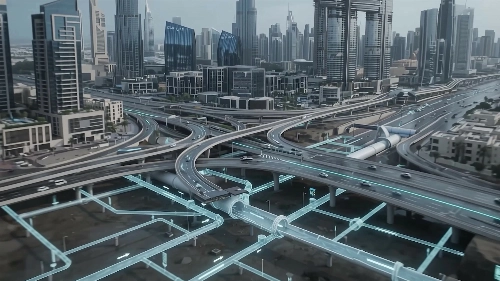
Dubai Municipality has awarded contracts for four major projects under Phase 3 of the “Tasreef” Programme, marking a significant step in the emirate’s efforts to enhance its stormwater drainage infrastructure. The initiative follows the directives of His Highness Sheikh Mohammed Bin Rashid Al Maktoum, Vice President and Prime Minister of the UAE and Ruler of Dubai, to build world-leading, resilient infrastructure capable of supporting the city’s long-term expansion. It provides a stable and enabling environment for the growth of businesses and economic, commercial and tourism activities, reinforcing Dubai’s position as the world’s best city to live, work, invest and visit.”, at the same time.
Valued at Dhs3 billion, these projects will involve the construction and extension of approximately 100 kilometers of main drainage lines. The new conduits, which will reach diameters of up to 3 meters, are designed to significantly bolster the city’s ability to manage heavy rainfall.
These developments will span nearly 100 square kilometers, targeting critical economic, industrial, and tourism corridors. Key neighborhoods slated for upgrades include Jumeirah, Umm Suqeim, Al Safa, Al Manara, Al Quoz, Al Barsha, Al Wasl, Za’abeel, Al Bada’a, Al Satwa, and Al Marmoom, all of which will be integrated into the central drainage network.
As part of the broader Dhs30 billion Tasreef Programme, this initiative is the largest integrated stormwater collection system in the region. Once fully operational, the system is expected to increase drainage capacity by 700 percent while reducing maintenance and pumping station operational costs by 20 percent. Helping to prevent water accumulation, this will enable the drainage and management of large volumes of water flow with operational flexibility.
Beyond managing rainfall, the program aims to align with the Dubai 2040 Urban Master Plan and the UAE’s Net Zero 2050 Strategy by extending the network’s lifespan and fostering environmental sustainability. Eng. Marwan Ahmed Bin Ghalita, Director General of Dubai Municipality, emphasized that the project serves as a cornerstone for building a future-proof city that prioritizes the quality of life, safety, and security of its residents and investors.
Eng. Adel Mohammed Al Marzouqi, CEO of the Waste and Sewerage Agency at Dubai Municipality, noted that the third phase is crucial for protecting assets and ensuring efficient traffic flow during adverse weather. The upgrades are designed to make the city significantly more resilient to climate-related changes.
The Jumeirah and Umm Suqeim development stands as one of the largest efforts within this phase. It will install roughly 42 kilometers of main drainage lines, covering communities from Umm Suqeim 1, 2, and 3, and Umm Al Sheif to Jumeirah 3, Al Safa 1 and 2, and Al Manara along the Dubai Water Canal.
Simultaneously, a separate project focusing on the corridor between Sheikh Zayed Road and Al Khail Road will add 14 kilometers of high-standard drainage lines. This work is set to benefit strategic areas, including the Al Khail Road interchange toward Umm Suqeim, Al Marabea Street, and Al Waha Street. The project includes the construction of 14 kilometres of main stormwater drainage lines in accordance with the highest international standards.
Specific industrial hubs, including Al Quoz Industrial Areas 1, 3, and 4, as well as Al Barsha 1, will also see direct improvements through these capacity enhancement projects.
Another major component focuses on the Al Wasl Road area, covering up to 25 square kilometers. This project includes 21 kilometers of integrated main and secondary conveyance lines to serve districts east of the Dubai Water Canal, such as Za’abeel 2, Al Wasl, Jumeirah 1 and 2, Al Bada’a, Al Satwa, and the Dubai World Trade Centre 1 and 2.
Furthermore, as part of the third phase, the Tasreef Programme is extending into Al Marmoom. This project will implement 23 kilometers of drainage infrastructure to ensure sustainable service delivery across the area’s vital locations.
By connecting these diverse regions into a single, cohesive, and highly efficient network, Dubai Municipality aims to establish a comprehensive model for urban water management that safeguards public infrastructure while supporting the continued growth of the emirate’s global profile.