Judge Rejects Trump Administration Move to Segregate California Ballots

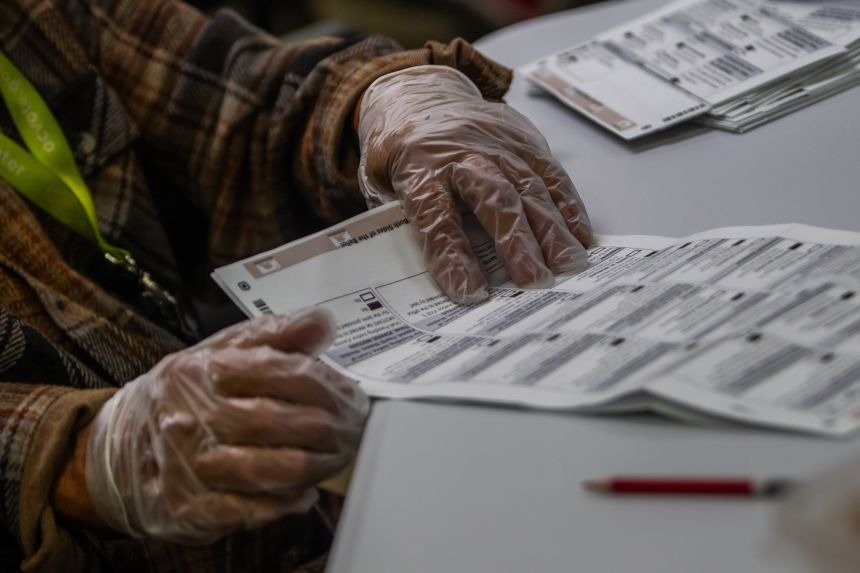
A federal judge in California has denied the Justice Department’s request to intervene in the state’s current mail-in ballot counting process. The ruling prevents the federal government from forcing officials to segregate as many as 20,000 ballots intended for a citizenship verification check, with the judge warning such actions would “wreak havoc and disrupt the election that is already underway.”
Judge David O. Carter, presiding over the Central District of California, stated that the administration’s legal challenge threatened to undermine state sovereignty and decades of established voting and civil rights protections. He emphasized that the request was based on unfounded allegations and could “create a chilling effect on election workers and voters alike, and discount the votes of United States citizens.”
The Justice Department’s emergency lawsuit relied on a purchased list of voter data cross-referenced with federal files. In his 26-page order issued after a lengthy hearing, Carter criticized the legal maneuver, noting that the federal government already possesses the authority to prosecute non-citizens who vote unlawfully. He argued that the state’s ongoing count does not interfere with the administration’s ability to allocate federal resources for such enforcement actions. According to carter, in his 26-page order the day after a lengthy hearing,, The Justice Department had its own legal tool already in which it could combat voter fraud, with federal prosecutions of noncitizens accused of unlawfull. According to “The United, Does not explain why Defendants continuing to count ballots impairs any present or future [illegal voting] prosecution,” Carter wrote. “Federal law is enforced by the federal government.
The administration, which had been preparing to use controversial data-matching programs to challenge voter registrations, provided California officials with a list of 20,000 “high confidence” matches on a thumb drive secured with a handwritten password, demanding action within 48 hours. However, local election authorities reported that many names on the list were either inactive, excluded from current voter rolls, or belonged to individuals who were, in fact, born in the United States. “Individuals who have met the requirements of California’s voter registration laws must not be deprived of a core right merely because of unfounded allegations stemming from a procedure rife with uncertainty and errors,”. The administration has kept secret key details about how it analyzed California’s voter list and came to the conclusion that thousands of those individuals could be noncitizens. This story has been updated with additional details.
Earlier this year, the Department of Homeland Security alleged that as many as 190,000 registered voters in California could be ineligible foreigners. Similar lists have been presented to election officials in Washington state and three other Democratic-led states, marking a broader push by the administration to dispute ballot eligibility using these data sets.
The Justice Department promptly filed an appeal against Judge Carter’s decision on Wednesday evening. The litigation follows a previous unsuccessful attempt last week, when the U.S. 9th Circuit Court of Appeals returned the case to Carter, ruling that an initial appeal was premature while expressing skepticism toward the merits of the federal government’s arguments. In a 2-1 ruling, sent the case back to Carter saying the appeal was premature, the US 9th Circuit Court of Appeals. But the two judges in the majority also indicated they believed the DOJ’s arguments for segregating ballots were likely to fail on the merits as well.
Legal experts view the California case as a critical test of the administration’s reach in attempting to disrupt state-level ballot processing. While the federal government maintains that these interventions are necessary to ensure election integrity, officials at the local level continue to dispute the accuracy of the underlying data provided by federal agencies.